
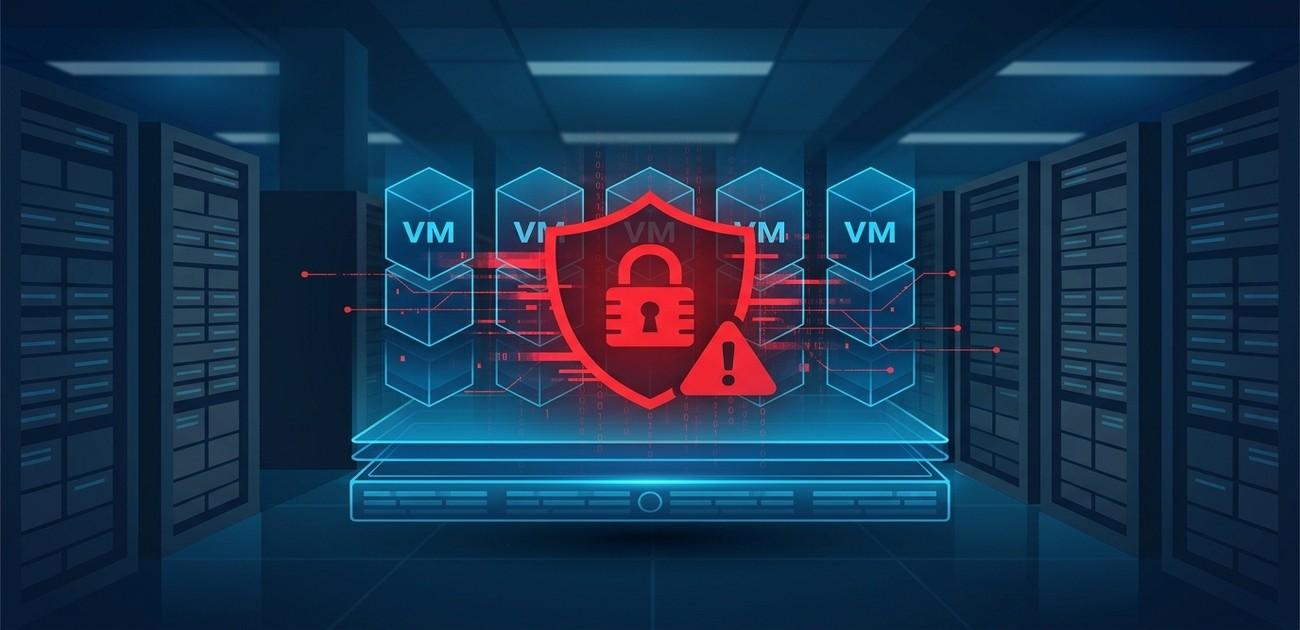
CyberUpdates365 Threat Intelligence Desk: Technical analysis and remediation protocol regarding the VMSA-2025-0004 vulnerability.
By Uday Patil, Cybersecurity Analyst
The highly critical VMware ESXi flaw CVE-2025-22225 now used in active ransomware attacks is causing massive panic across enterprise data centers worldwide.
CISA has officially confirmed what many hypervisor administrators feared: this vulnerability, first flagged as a nation-state zero-day, has fully transitioned into the cybercriminal underground. In February 2026, CISA updated its KEV catalog to officially mark this specific CVE as “Known To Be Used in Ransomware Campaigns.”
The uncomfortable reality is that this exact flaw has quietly existed as an attack chain since at least early 2024. If your ESXi fleet isn’t fully patched to the March 2025 fixed builds, you are facing an imminent, non-hypothetical risk of full infrastructure compromise.
Related Threat Intelligence Reports:
- 2026 Major Data Breaches Timeline & Analysis
- Critical Vulnerability: Palo Alto PAN-OS Auth Bypass
- Enterprise CVE Security Hub 2026
The Hidden Reality: Not an Unauthenticated Attack
Here is the technical detail most panic-driven coverage skips: the VMware ESXi sandbox escape cannot be triggered by a random internet-facing attacker with zero foothold. Per Broadcom’s own advisory, exploitation requires an attacker to already have administrative privileges inside a guest virtual machine’s VMX process.
From there, the flaw allows the attacker to trigger an arbitrary kernel write that escapes the VM sandbox and lands them directly on the host hypervisor. This sandbox evasion mechanic is highly sophisticated, mirroring the severity of the recent Apple iOS Zero-Click Exploit we analyzed earlier this year.
The Triple-Threat Vulnerability Chain
CVE-2025-22225 is actually one part of a three-vulnerability chain disclosed together in March 2025:
| CVE ID | CVSS Score | Vulnerability Type & Impact |
|---|---|---|
| CVE-2025-22224 | 9.3 (Critical) | Time-of-Check Time-of-Use (TOCTOU) flaw leading to an out-of-bounds write. |
| CVE-2025-22225 | 8.2 (High) | Arbitrary-write sandbox escape, now flagged for active ransomware deployment. |
| CVE-2025-22226 | 7.1 (High) | Out-of-bounds read in HGFS causing memory and credential leakage. |
Why “Just Patch It” Advice Backfires
Most advisories tell you to “just patch.” That is correct, but as a standalone instruction, it is incomplete. Here is why:
- No Workarounds Exist: Unlike some older ESXi flaws (like ESXiArgs) where you could disable a vulnerable service via SSH as a stopgap, Broadcom explicitly lists “Workarounds: None” for all three CVEs. You must schedule the maintenance window and patch.
- Initial Access Reality: Teams sometimes deprioritize VM-escape bugs because they “need existing privileges.” However, attackers routinely obtain admin-level guest access through unpatched VPNs and then use CVE-2025-22225 to jump to the host. This is identical to the lateral movement risks seen in the recent Mercedes-Benz Source Code Exposure.
- Broad Attack Surface: These CVEs affect Workstation, Fusion, Cloud Foundation, vSphere, and Telco Cloud Platform—not just ESXi bare-metal hosts.
Actionable Remediation Checklist
To secure your virtualized environments against this active CISA KEV catalog threat vector, execute the following protocol immediately:
- Verify Build Numbers: Confirm your ESXi, Workstation, and vSphere builds are updated to the fixed versions listed in VMSA-2025-0004 (patched since March 2025).
- Monitor VSOCK Traffic: Actively monitor your network for anomalous VSOCK traffic, notably on port 10000, and scan for unexpected inter-VM command tools running from guest VMs.
- Secure Edge Devices: Treat any VPN appliance as a potential initial-access vector into your virtualization environment, similar to the edge-device targeting seen in the Roundcube Webmail Attacks.
- Isolate Backups: Maintain VM backups stored completely outside the ESXi environment so a host-level ransomware encryption event does not destroy your recovery path.
Frequently Asked Questions (FAQ)
Is the VMware ransomware 2026 threat a newly discovered zero-day?
No. Broadcom disclosed and patched it in March 2025. What is new (as of February 2026) is CISA confirming that it is now being used specifically in massive ransomware campaigns, not just targeted espionage intrusions.
Can an external attacker exploit this flaw directly?
No. It requires the attacker to already have administrative privileges inside a guest VM’s VMX process. It is a second-stage escalation flaw used for sandbox evasion.
Can I disable a service to prevent exploitation without patching?
No. Broadcom’s advisory explicitly states there are zero workarounds for CVE-2025-22224, CVE-2025-22225, and CVE-2025-22226. Patching the core hypervisor is the only remediation.
Looking for a complete list of this year’s cyber attacks? Check out our ultimate timeline of recent major data breaches 2026.