
Menu
DATA BREACHES

Mercedes Leak: Mercedes-Benz Data Breach & Source Code Exposure Analysis 2026

Uday Patil Dec 1, 2025 9 min read 63 views
Mercedes Leak: Mercedes-Benz Data Breach & Source Code Exposure Analysis 2026

The emergence of a publicized Mercedes leak involving proprietary engineering repositories underscores an escalating cybersecurity crisis across modern industrial manufacturing: automated software secrets sprawl. When decentralized DevOps pipelines inadvertently expose internal source code and embedded authentication tokens to public internet routing, manufacturing powerhouses confront severe lateral network vulnerabilities that transcend traditional software piracy.

I understand the urgent alarm and enterprise operational disruption experienced when threat syndicates claim unauthorized exfiltration of intellectual property belonging to global titans like Mercedes-Benz. Here is my technical engineering assessment: by examining this repository compromise analysis, enterprise DevOps architects and vehicle telematics operators will understand the procedural vulnerability of hardcoded cloud API keys, execute rapid remediation protocols against exposed Git infrastructure, and establish immutable secret management workflows across cloud environments.

In this high-priority data breach investigation, we dissect recent illicit forum disclosures alleging the unauthorized harvesting of proprietary automotive source code, evaluate the technical hazards of exposed AWS and Azure cloud keys, and outline essential mitigation controls for connected vehicle owners. To contextualize these supply chain intrusion vectors within broader corporate threat paradigms, combine this examination with our comparative breakdowns covering Python-Based Malware & Cross-Platform Evasion Techniques, track interconnected corporate exposures across our canonical Data Breach 2026 Major Incidents Timeline, review corresponding automotive telematic vulnerabilities in our Tesla Cybersecurity Risk Assessment, investigate third-party vendor compromise dynamics in our CISA Supply Chain Emergency Analysis, and integrate robust organizational defense protocols from our central 2026 Small Business & Consumer Cyber Security Defense Vault.

The Breach Claim: What Was Compromised in the Mercedes Leak?

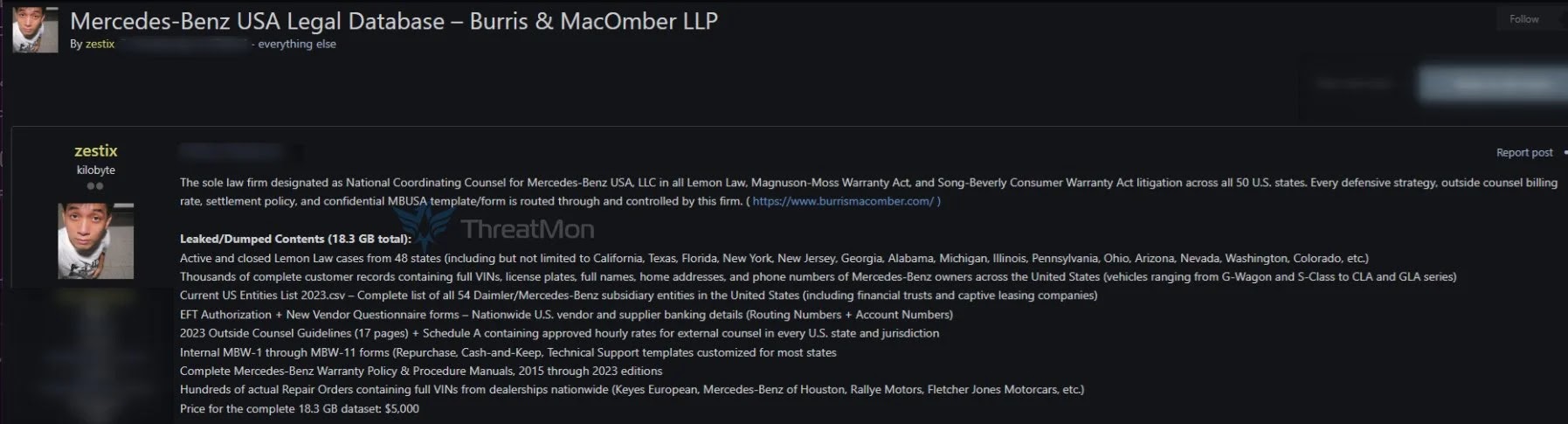
According to comprehensive digital forensics dispatches circulating across primary threat intelligence monitoring channels, a recognized cybercrime syndicate posted verification archives on an illicit underground marketplace, claiming a massive breach of automotive manufacturing infrastructure.

Mercedes leak data breach claim cybercrime forum announcement 2026
Figure 1: The alleged data leak announcement circulating on a prominent cybercrime forum.

Here is the technical exposure breakdown: rather than penetrating perimeter corporate firewalls via traditional zero-day server exploitation, threat actors utilized automated scanning bots designed to continuously scour public and misconfigured enterprise version control servers, including GitHub and corporate GitLab instances. The leaked data archives published as diagnostic proof on cybercrime forums reportedly comprise three highly critical proprietary asset categories:

  • Proprietary Source Code: Internal algorithmic logic, vehicle telematics interface architecture, and specialized backend manufacturing deployment scripts developed specifically by engineering personnel at Mercedes-Benz.
  • Hardcoded Cloud Credentials: Highly sensitive operational authentication strings, including active Amazon Web Services (AWS) Secret Access Keys, Microsoft Azure Service Principal Tokens, and Secure Shell (SSH) deployment certificates found completely unencrypted inside software code commits.
  • Internal Engineering Blueprints: Confidential server architecture diagrams, internal network routing tables, and operational Application Programming Interface (API) documentation detailing data exchange protocols between internal enterprise databases and consumer mobile applications.

Mercedes Leak Exposed Artifact & Exploitation Risk Matrix

Evaluating the severity of corporate source code exposure requires analyzing how attackers transform passive read-only repository access into active server compromise and lateral infrastructure penetration.

Let’s examine the technical risk taxonomy: when software developers inadvertently commit authentication secrets into version control repositories, threat syndicates immediately execute script automated parsers to validate key permissions. Study the diagnostic matrix below to contrast the specific artifacts compromised in modern repository leaks against their resulting exploitation trajectories and required containment intervals.

Exposed Asset TypePrimary Exposure VectorImmediate Operational Exploitation HazardRequired Remediation Timeframe
Hardcoded AWS & Azure KeysPlaintext tokens inside committed configuration files.Direct lateral movement; unauthorized cloud database reading & deletion.Immediate (< 15 Minutes via Revocation)
Vehicle Telematics API SourceMisconfigured public repositories or exposed CI/CD runners.Discovery of unpatched zero-day flaws within vehicle companion apps.24 – 72 Hours (Code audit & endpoint hardening)
Internal SSH Infrastructure KeysDeveloper terminal configuration backups pushed to cloud repositories.Unauthorized administrative remote server tunneling and persistence.Immediate (< 60 Minutes via Host Revocation)
Backend Architecture DiagramsUnencrypted Markdown and operational wiki document folders.Accelerated attack reconnaissance; mapping internal subnet blind spots.Long-term architectural re-segmentation

This incident reflects a recurring tactical methodology across organized threat groups: systematically exploiting third-party contractor environments and exposed development repositories rather than executing loud frontal cyberattacks against primary corporate firewalls.

CyberUpdates365 Engineering Analysis: The “Secrets Sprawl” Problem

While Mercedes-Benz conducts exhaustive digital forensics investigations to establish the complete architectural impact of these forum disclosures, the exposed sample archives point directly toward an endemic enterprise cybersecurity failure: Secrets Sprawl.

Here is the structural engineering vulnerability: across enterprise DevOps organizations, developers routinely handle thousands of cryptographic microservice tokens, encryption certificates, and third-party API credentials daily. When software deployment schedules accelerate, engineers frequently bypass internal security protocols, embedding functional authentication keys directly into plaintext software code to expedite testing. Once these files commit to centralized version control servers, the secrets sprawl uncontrollably across continuous integration and deployment (CI/CD) pipelines, backup archives, and developer local machines.

Why does secrets sprawl generate catastrophic operational risk? Because modern intrusion syndicates treat source code primarily as a navigation roadmap to unlock cloud compute resources. If an exposed Git repository reveals a privileged AWS IAM (Identity and Access Management) key, an unauthorized attacker ceases being a simple intellectual property thief and transforms instantly into an infrastructure intruder capable of pivoting across live databases, modifying customer deployment instances, and installing persistent backdoor malware across connected corporate production networks.

DevOps Secrets Management vs. Hardcoded Vulnerability Matrix

Contrasting legacy code deployment behaviors against hardened DevSecOps workflows illustrates how enterprise development teams can fundamentally eliminate repository token leakage.

Let’s examine the comparative architecture models: organizations relying upon manual peer code reviews to catch embedded secrets fail consistently against automated harvesting tools. To achieve structural immunity against secrets sprawl, enterprises must transition toward dynamic cryptographic vaults and pre-commit automation. Study the diagnostic table below to evaluate the efficacy of differing developer credential management paradigms.

Secrets Management ParadigmStorage ArchitectureAutomated Revocation & RotationEnterprise Security Verdict
Hardcoded Plaintext StringsDirect syntax within source script files (.py, .js, .config).None (Requires manual repository scanning and recoding)Critical Risk (Immediate target for automated scrapers)
Local Environment (.env) VariablesIsolated filesystem configurations excluded via .gitignore.Manual (Requires individual developer environment resets)Moderate Risk (Vulnerable to local directory misconfiguration)
Centralized Secret VaultsDedicated encrypted hardware vaults (HashiCorp / Azure Key Vault).Fully Automated (Dynamic temporary lease tokens)Verified Titanium Safe (Zero plaintext credentials in code)

Actionable Enterprise DevOps & Customer Security Protocol

Mitigating the secondary fallout of a major automotive source code disclosure requires decisive defensive execution across both software engineering environments and consumer telematics accounts.

Let’s examine the synchronized remediation manual: while corporate engineering teams focus on purging compromised cryptographic keys from cloud infrastructure, opportunistic cyber criminals exploit public breach news to deploy sophisticated phishing scams against connected vehicle owners. To protect both corporate pipelines and personal automotive accounts, execute the appropriate mitigation checklists below:

Mandatory DevOps & Pipeline Hardening Checkboxes

  • Control 1: Enforce Automated Pre-Commit Secret Scanning: Integrate dedicated programmatic scanners—such as TruffleHog, GitGuardian, or Gitleaks—directly into developer IDEs and Git hooks to intercept and reject commits containing API tokens before reaching cloud servers.
  • Control 2: Execute Emergency Token Revocation & Rotation: Treat any access token discovered within an externally accessible repository as irrevocably compromised; instantly terminate active key sessions inside cloud IAM consoles and issue newly generated cryptographic replacements.
  • Control 3: Migrate to Dynamic Secret Vault Infrastructures: Eradicate local configuration files by connecting CI/CD production deployment scripts to centralized enterprise vaults (such as HashiCorp Vault or AWS Secrets Manager) that dispense transient, short-lived API lease credentials.
  • Control 4: Implement Strict Least-Privilege IAM Scopes: Restrict programmatic service keys to narrow, highly specific execution tasks—ensuring that an inadvertently leaked development read-only token cannot execute administrative write or deletion commands across live database arrays.

Mandatory Mercedes-Benz Vehicle Owner Security Checkboxes

  • Control 5: Defeat Opportunistic Phishing & Smishing Campaigns: Exercise extreme skepticism toward unexpected SMS texts, emails, or phone communications warning of an urgent “Mercedes me account restriction”; never click external password recovery links or provide verification codes to telephone operators.
  • Control 6: Enable Robust Multi-Factor Authentication (MFA): Access the official Mercedes me companion application to verify that multi-factor authentication is permanently enabled, blocking unauthorized remote vehicle localization or telemetry manipulation even if passwords leak.
  • Control 7: Rely Exclusively on Official Over-The-Air (OTA) Updates: Apply vehicle infotainment and telematics firmware updates solely through validated built-in dashboard OTA interfaces or directly inside authorized dealership service centers; never install unverified software update patches from third-party websites or physical USB drives.

Frequently Asked Questions (FAQ)

Verified engineering clarifications addressing common inquiries regarding the alleged Mercedes-Benz data leak, secrets sprawl exploitation mechanics, cloud credential rotation steps, and vehicle telematic safety.

Q: What specific data was allegedly compromised in the 2026 Mercedes-Benz data breach?

Answer: According to sample archives posted by threat actors on cybercrime forums, the compromised material encompasses proprietary software source code, internal engineering API documentation, and hardcoded cloud authentication tokens including AWS Secret Access Keys, Microsoft Azure Service Principal tokens, and internal server SSH deployment keys.

Q: What is “Secrets Sprawl” and why does it endanger enterprise infrastructure?

Answer: Secrets Sprawl refers to the uncontrolled proliferation of cryptographic authentication tokens and passwords across source code repositories, CI/CD pipelines, and local developer workspaces. When embedded in plaintext, these credentials enable unauthorized threat actors to move laterally from merely reading code to taking control of live production cloud servers.

Q: How can enterprise software developers prevent source code token leakage?

Answer: Organizations must enforce automated pre-commit secret scanners (such as TruffleHog or GitGuardian) to block plaintext credential commits, integrate centralized dynamic secret vaults like HashiCorp Vault, and ensure all programmatic API tokens operate under strictly restricted least-privilege IAM permissions.

Q: Does the source code leak mean that individual Mercedes-Benz vehicles can be remotely hacked?

Answer: There is no direct indication that consumer vehicle driving hardware has been remotely compromised. However, exposure of vehicle telematic APIs and companion app source code can assist advanced researchers and threat actors in identifying future zero-day vulnerabilities, making timely over-the-air (OTA) software patching essential.

Q: What precautions should Mercedes me companion app users take immediately?

Answer: Vehicle owners should log into the official Mercedes me application to enable Multi-Factor Authentication (MFA), disregard unexpected customer support phishing emails requesting urgent account re-verification, and install system software updates strictly through authorized in-car OTA delivery channels.

Reported by CyberUpdates365 Threat Intelligence Desk: Delivering critical engineering analyses across industrial data breaches, DevOps vulnerability mitigation, and enterprise software architecture. Disclaimer: This threat report is analyzed from empirical disclosures published on cybersecurity forums; CyberUpdates365 advises enterprises to consult official manufacturer security dispatches for certified internal findings. To fortify organizational infrastructure against corresponding attack vectors, review our technical manuals on Python Malware Evasion Tactics, cross-reference commercial security failures across our 2026 Data Breach Timeline, audit vehicular engineering risks in our Tesla Cybersecurity Risk Report, evaluate vendor exposure through our CISA Supply Chain Emergency Guide, and implement robust institutional hardening within our central 2026 Small Business & Consumer Cyber Security Defense Vault. All mitigation protocols and DevOps hardening measures are verified current as of August 2026.

Author

  • Uday Patil

    Uday Patil is a Cybersecurity Researcher, DevSecOps Engineer, and the Founder of CyberUpdates365. Specializing in Threat Intelligence and Zero-Day vulnerability analysis, Uday is dedicated to breaking down complex cyber threats into actionable insights. His mission is to empower developers and security teams worldwide with rapid alerts, remediation scripts, and practical guidance to stay ahead of the evolving threat landscape.