By Uday Patil, Cybersecurity Analyst
With financial cybercrime at an all-time high, relying solely on your bank’s baseline security is no longer enough. If you are wondering how to keep debit card safe from modern skimmers, phishing scams, and dark web data leaks, you are not alone. A single compromised card can drain your checking account in minutes, leaving you fighting for weeks to recover your funds.
Unlike credit cards, which use the bank’s money and offer robust federal protections, debit cards are directly linked to your hard-earned cash. This fundamental difference means that implementing strict debit card fraud protection is a critical necessity for your personal financial security.
The Rising Threat of Debit Fraud
Financial criminals have evolved far beyond simple physical card theft. Today, the most common threats are entirely digital or highly sophisticated physical intercepts.
Card skimming at gas stations and ATMs remains a massive issue. Scammers install nearly invisible hardware overlays that read your card’s magnetic stripe while a hidden camera records your PIN. Simultaneously, massive corporate data breaches continuously dump millions of valid card numbers onto the dark web for malicious actors to purchase and use.
Furthermore, phishing emails and SMS text scams (smishing) trick users into entering their card details on fake websites designed to mimic legitimate banks, streaming services, or delivery companies.
How to Keep Debit Card Safe: Daily Best Practices
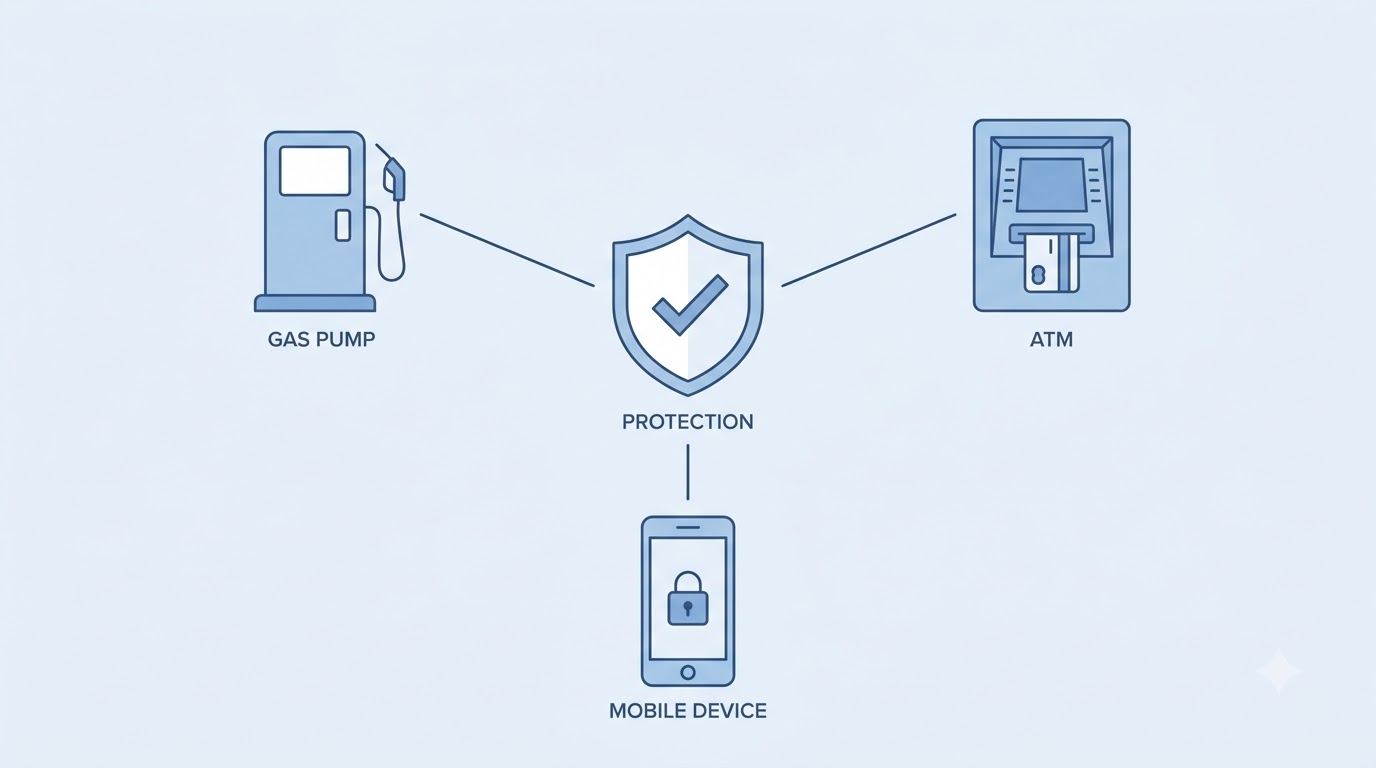
Protecting your account requires a combination of behavioral changes and utilizing the technological safeguards your bank provides. Start by implementing these non-negotiable security habits.
1. Turn on Real-Time Transaction Alerts
Every major bank app offers push notifications or SMS alerts for transactions. You must enable these for every single purchase, regardless of the amount. If a scammer tests your card with a small $1 charge, an immediate alert allows you to freeze the card before they drain the entire account.
2. Use Bank ATMs Instead of Third-Party Terminals
Avoid generic, standalone ATMs found in convenience stores, dive bars, or random street corners. These are prime targets for skimmers because they are rarely monitored. Always try to use ATMs located inside an actual bank branch, where high security and frequent inspections deter tampering.
3. Never Use Your Debit Card for Gas or Restaurants
Gas station pumps are notorious for skimming devices. When dining out, handing your physical debit card to a server who walks out of sight is a massive security risk. Whenever possible, use a credit card for these transactions, or utilize contactless payment methods like Apple Pay or Google Wallet, which use tokenization to mask your actual card number.
Is Paying Online With Debit Card Safe?
A common question is: is paying online with debit card safe? The harsh reality is that it is the most vulnerable way to shop online.
When you enter your debit card number directly into an e-commerce checkout page, you are trusting that specific merchant’s cybersecurity infrastructure. If their database is breached, your direct banking details are exposed.
To safely shop online using funds from your checking account, you must place a barrier between your bank and the merchant. You can achieve this by:
- Using PayPal or Apple Pay: These services act as a secure intermediary. The merchant never sees your actual card number.
- Generating Virtual Debit Cards: Many modern banks and services like Privacy.com allow you to generate single-use, temporary card numbers. You can set a specific spending limit on this virtual card, ensuring that even if the number is stolen, it is completely useless to the attacker.
Debit Card vs Credit Card: Quick Safety Comparison
| Factor | Debit Card | Credit Card |
|---|---|---|
| Whose money is at risk | Your own bank funds, directly | The bank’s money (you repay later) |
| Governing law | Electronic Fund Transfer Act (EFTA) | Fair Credit Billing Act (FCBA) |
| Max liability if reported fast | $50 (within 2 business days) | $50 (often $0 with issuer policy) |
| Best use case | ATM withdrawals, in-person trusted purchases | Online shopping, gas stations, restaurants |
Handling an Unauthorized Transaction on Debit Card
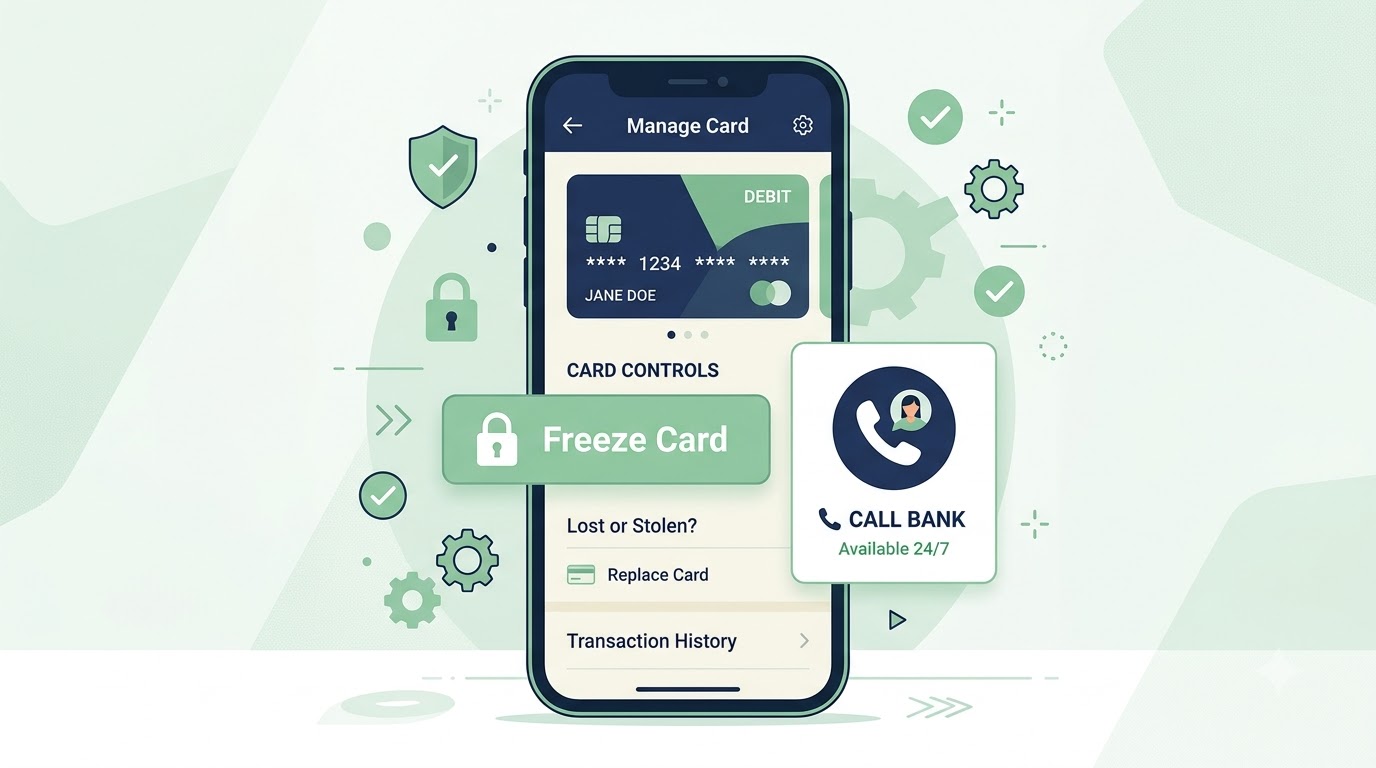
Even with strict precautions, breaches happen. If you receive an alert for a purchase you did not make, your reaction speed is the deciding factor in whether you get your money back.
The Electronic Fund Transfer Act (EFTA), enforced by the Consumer Financial Protection Bureau (CFPB), protects consumers — but your liability depends entirely on how quickly you report the unauthorized transaction on debit card.
- Immediate Action (Within 2 Days): If you report a lost card or an unauthorized charge within two business days of learning about it, your maximum liability is generally limited to $50.
- Delayed Reporting (Within 60 Days): If you report it after two days but before 60 days of your bank statement being sent, you could be liable for up to $500.
- Failure to Report: If you fail to report the fraud charges on debit card within 60 days, you risk losing all the money stolen from your account.
The moment you spot fraud, immediately open your banking app and tap the “Freeze Card” or “Lock Card” button. Then, immediately call the fraud department number printed on the back of your card to begin the dispute process.
Advanced Debit Card Fraud Protection
For ultimate peace of mind, you should separate your spending money from your savings. Never keep your entire net worth in the checking account attached to your primary debit card.
Keep the bulk of your funds in a high-yield savings account or a separate, unlinked checking account. Only transfer what you need for the week into your main debit account. This creates a natural “firewall” — if your debit card is compromised, the attacker can only access a fraction of your money.
Additionally, regularly check your accounts for unauthorized software connections or compromised credentials. Ensuring your digital hygiene is strong is just as important as protecting the physical card. For a complete checkup, review our Device Security Audit 2026.
Related guide: For broader context and related coverage, see our personal and small-business cybersecurity guide.
Frequently Asked Questions (FAQ)
How can I protect my debit card from being hacked?
To protect your debit card, never share your PIN, avoid using standalone ATMs, enable real-time transaction alerts on your banking app, and never use the physical card for online purchases without an intermediary like PayPal or Apple Pay.
What happens if there are fraud charges on debit card?
If you spot fraud charges on debit card, freeze the card immediately via your banking app and call your bank’s fraud department. If reported within two business days, federal law typically limits your liability to $50.
Is it safer to use a credit card or a debit card?
A credit card is significantly safer for daily purchases and online shopping. Credit cards use the bank’s money, offer stronger federal fraud protection (Fair Credit Billing Act), and keep your personal checking account funds insulated from attackers.
How do scammers get my debit card number?
Scammers obtain debit card numbers through physical skimmers at gas stations and ATMs, large-scale corporate data breaches, phishing emails, or malware installed on compromised home computers and public Wi-Fi networks.
How to keep your debit card safe while traveling?
Notify your bank before international travel to prevent automatic fraud freezes, avoid using debit cards at unfamiliar ATMs abroad, keep a backup credit card separate from your debit card, and enable international transaction alerts so you’re notified of every charge in real time.
Where can I file an official complaint about unauthorized debit card charges?
If your bank doesn’t resolve your dispute, you can file a complaint directly with the Consumer Financial Protection Bureau (CFPB), the federal agency that enforces EFTA and Regulation E.
Conclusion
Protecting your hard-earned money requires vigilance. By utilizing virtual cards for online shopping, enabling strict bank alerts, and knowing exactly how to respond to unauthorized transactions, you can confidently secure your finances against modern cyber threats.
If you suspect your overall identity has been compromised beyond just a single card, you need to take broader protective measures immediately. Check our comprehensive Identity Theft Protection Guide 2026 for the next steps.