IMPORTANT NOTICE
This comprehensive guide provides cybersecurity best practices and analysis based on threat intelligence reports and industry analysis regarding North Korean state-sponsored cryptocurrency theft operations. Statistics and specific incidents referenced are based on industry reports and threat intelligence. For the most current information, visit CISA Cybersecurity Advisories and FBI IC3.
Last Updated: November 5, 2025
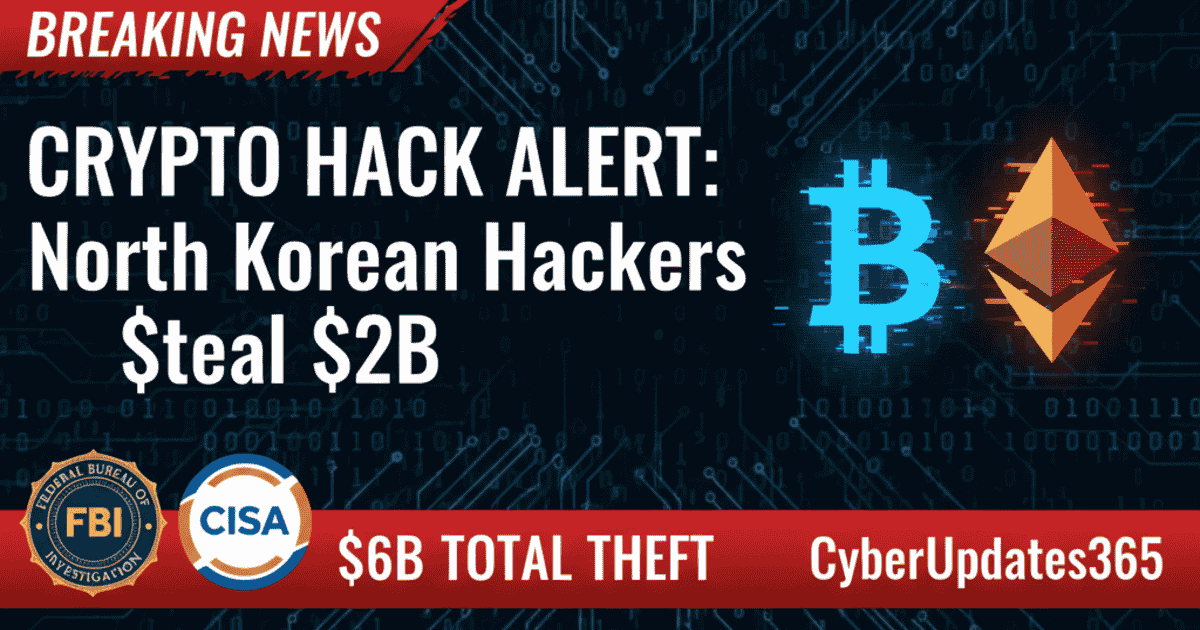
North Korean state-sponsored hacking groups have been identified by federal law enforcement agencies as significant threats to cryptocurrency exchanges, blockchain platforms, and digital asset investors. According to threat intelligence reports, these groups have targeted cryptocurrency systems through sophisticated social engineering, supply chain attacks, and advanced persistent threats.
This comprehensive guide provides US cryptocurrency exchanges, businesses, and individual investors with actionable cybersecurity strategies to protect against North Korean state-sponsored cryptocurrency theft operations, based on threat intelligence reports, federal guidance, and industry best practices.
TABLE OF CONTENTS
- Understanding the North Korean Cryptocurrency Threat Landscape
- Common Attack Methods and Techniques
- Comprehensive Protection Strategies
- Federal Response and Resources
- Incident Response and Reporting
- Best Practices for Cryptocurrency Security
- Resources and Support
- Conclusion and Next Steps
UNDERSTANDING THE NORTH KOREAN CRYPTOCURRENCY THREAT LANDSCAPE
According to threat intelligence reports and federal law enforcement analysis, North Korean state-sponsored hacking groups have been identified as responsible for significant cryptocurrency theft operations targeting cryptocurrency exchanges, blockchain platforms, and digital asset investors worldwide, including the United States.
Threat Intelligence Overview
Federal law enforcement agencies, including the FBI and CISA, have issued warnings about North Korean state-sponsored cryptocurrency theft operations. These operations are believed to serve multiple purposes, including funding weapons programs and circumventing international sanctions.
Sources: CISA Cybersecurity Advisories | FBI IC3 Reports
Identified Threat Actors
According to federal law enforcement analysis, the following North Korean hacking groups have been identified as active in cryptocurrency theft operations:
- Lazarus Group: Identified by federal agencies as a North Korean state-sponsored hacking group involved in cryptocurrency theft operations
- Kimsuky: Another North Korean state-sponsored group identified in cybersecurity threat intelligence
- Other State-Sponsored Groups: Additional groups identified by threat intelligence analysts
Source: CISA Joint Cybersecurity Advisories
Why Cryptocurrency Systems Are Targeted
Primary Motivations:
- Funding Sources: Cryptocurrency theft provides revenue streams for state-sponsored programs
- Sanction Circumvention: Cryptocurrency enables circumvention of international financial sanctions
- Anonymity: Cryptocurrency transactions can provide anonymity for financial operations
- High Value: Cryptocurrency systems often contain high-value digital assets
- Global Reach: Cryptocurrency platforms operate globally, providing multiple attack surfaces
COMMON ATTACK METHODS AND TECHNIQUES
According to threat intelligence reports and cybersecurity analysis, North Korean state-sponsored groups employ sophisticated attack methods targeting cryptocurrency systems. Understanding these methods is essential for developing effective defense strategies.
Primary Attack Vectors
1. Social Engineering and Phishing
State-sponsored groups use sophisticated social engineering tactics to gain access to cryptocurrency systems:
- Spear-Phishing Campaigns: Highly personalized emails targeting cryptocurrency exchange employees
- Social Engineering Operations: Long-term campaigns where attackers pose as legitimate business partners
- Malware Delivery: Malicious attachments disguised as legitimate business documents
- Credential Theft: Targeting employees with access to cryptocurrency systems
2. Supply Chain Attacks
Supply chain attacks involve compromising third-party software providers to insert malicious code into legitimate software updates:
- Compromising third-party software vendors
- Inserting backdoors into legitimate software updates
- Targeting software used by cryptocurrency exchanges
- Exploiting trust relationships between vendors and exchanges
3. Advanced Persistent Threats (APTs)
Advanced persistent threats involve maintaining long-term, undetected access to systems:
- Extended reconnaissance and target research
- Building relationships with employees through fake identities
- Lateral movement through compromised networks
- Coordinated theft operations executed over time
4. Vulnerability Exploitation
State-sponsored groups exploit vulnerabilities in cryptocurrency systems:
- Zero-day exploits targeting blockchain protocols
- Vulnerabilities in wallet software
- Exchange infrastructure vulnerabilities
- Smart contract vulnerabilities
Source: CISA Cyber Threats and Advisories
COMPREHENSIVE PROTECTION STRATEGIES
Implementing comprehensive cybersecurity measures is essential for protecting cryptocurrency systems from North Korean state-sponsored attacks. The following strategies are based on CISA guidelines, NIST Cybersecurity Framework, and industry best practices.
IMMEDIATE PROTECTION MEASURES (Implement This Week)
1. Multi-Factor Authentication (MFA)
- Enable MFA on all cryptocurrency exchange accounts
- Use hardware tokens or authenticator apps (avoid SMS-based MFA)
- Require MFA for all administrative access
- Implement MFA for all cryptocurrency transactions
2. Hardware Security Modules (HSMs)
- Implement HSMs for all private key storage
- Use HSMs for cryptographic operations
- Protect private keys with hardware-based security
- Implement geographically distributed key storage
3. Network Segmentation
- Isolate cryptocurrency systems from general corporate networks
- Implement firewalls between cryptocurrency systems and other networks
- Use network segmentation to limit lateral movement
- Monitor network traffic between segments
4. Employee Training
- Conduct security awareness training focusing on social engineering
- Train employees to recognize phishing attempts
- Implement simulated phishing campaigns
- Provide regular security updates and training
MEDIUM-TERM IMPROVEMENTS (Next 30 Days)
1. Security Monitoring and Detection
- Threat Detection: Implement AI-powered behavioral analysis for detecting suspicious activities
- Transaction Monitoring: Real-time monitoring of cryptocurrency transactions
- Anomaly Detection: Deploy systems to detect unusual patterns and behaviors
- Security Operations: Establish 24/7 security monitoring capabilities
2. Vendor Security Assessment
- Third-Party Security: Conduct security assessments of all third-party vendors
- Supply Chain Security: Evaluate supply chain security risks
- Vendor Contracts: Include security requirements in vendor contracts
- Ongoing Monitoring: Continuously monitor vendor security posture
3. Incident Response Planning
- Response Plan: Develop comprehensive incident response plans
- Federal Contacts: Establish direct communication channels with FBI and CISA
- Response Team: Create dedicated incident response teams
- Regular Testing: Conduct regular incident response exercises
LONG-TERM STRATEGIC IMPROVEMENTS (Next 90 Days)
1. Advanced Security Technologies
- Behavioral Analytics: Deploy user and entity behavior analytics (UEBA)
- Threat Intelligence: Integrate threat intelligence feeds
- Security Information and Event Management (SIEM): Implement SIEM for centralized monitoring
- Quantum-Resistant Cryptography: Prepare for future quantum computing threats
2. Compliance and Governance
- Risk Assessments: Conduct comprehensive cybersecurity risk assessments
- Security Audits: Regular independent security audits
- Security Metrics: Establish security metrics and reporting
- Board Reporting: Regular cybersecurity reporting to executive leadership
FEDERAL RESPONSE AND RESOURCES
Federal law enforcement agencies, including the FBI and CISA, provide resources and support for organizations targeted by North Korean state-sponsored cryptocurrency theft operations.
FBI Cyber Division
The FBI Cyber Division investigates state-sponsored cryptocurrency theft operations and provides support to affected organizations:
- FBI IC3: Internet Crime Complaint Center – Report cyber crimes and cryptocurrency theft
- FBI Field Offices: Contact local FBI field offices for immediate threats
- Threat Intelligence: FBI provides threat intelligence and analysis
CISA Resources
CISA provides cybersecurity guidance and resources for protecting against state-sponsored attacks:
- CISA Cybersecurity Advisories: Cybersecurity Advisories
- CISA 24/7 Operations Center: 1-888-282-0870
- CISA Reporting: central@cisa.dhs.gov
- CISA Resources: Cybersecurity Resources and Tools
Treasury Department
The Treasury Department’s Office of Foreign Assets Control (OFAC) provides sanctions information and enforcement:
- Sanctions Compliance: Guidance on sanctions compliance for cryptocurrency operations
INCIDENT RESPONSE AND REPORTING
Having a comprehensive incident response plan is critical for cryptocurrency exchanges and businesses targeted by state-sponsored attacks. The following protocols are based on CISA guidance and industry best practices.
IMMEDIATE RESPONSE STEPS (First 24 Hours)
Step 1: Detection and Assessment
- Identify the nature and scope of the security incident
- Assess the potential impact on cryptocurrency operations
- Activate incident response team and procedures
- Document all evidence and maintain chain of custody
Step 2: Containment
- Isolate affected cryptocurrency systems from the network
- Prevent further spread of the attack
- Preserve evidence for forensic analysis
- Implement temporary operational workarounds
Step 3: Notification
- Notify internal leadership and board members
- Contact law enforcement (FBI: 1-800-CALL-FBI)
- Notify CISA (central@cisa.dhs.gov or 1-888-282-0870)
- Engage legal counsel and public relations teams
REPORTING REQUIREMENTS
Organizations must comply with multiple reporting requirements:
- FBI IC3: Report cyber crimes to FBI Internet Crime Complaint Center
- CISA: Report cybersecurity incidents to CISA within 72 hours
- Regulatory Agencies: Report to relevant financial regulators if applicable
- Customer Notification: Notify affected customers as required by law
BEST PRACTICES FOR CRYPTOCURRENCY SECURITY
The following best practices are recommended for protecting cryptocurrency systems from state-sponsored attacks.
For Cryptocurrency Exchanges
- Cold Storage: Store 90-95% of cryptocurrency holdings offline in cold storage
- Hardware Security Modules: Use HSMs for all private key operations
- Multi-Factor Authentication: Require MFA for all accounts and transactions
- Security Audits: Conduct regular independent security audits
- Employee Training: Provide ongoing security awareness training
- Incident Response: Maintain 24/7 incident response capabilities
For Individual Investors
- Hardware Wallets: Store significant cryptocurrency holdings in hardware wallets
- Multi-Factor Authentication: Enable MFA on all exchange accounts using authenticator apps
- Phishing Protection: Be cautious of emails claiming to be from exchanges
- Private Key Security: Never share private keys, seed phrases, or recovery words
- Password Management: Use unique, complex passwords managed through password managers
- Transaction Verification: Verify all recipient addresses before confirming transactions
- Account Monitoring: Monitor accounts regularly and configure instant alerts
For Businesses
- Network Segmentation: Isolate cryptocurrency systems from corporate networks
- Access Controls: Implement principle of least privilege
- Security Monitoring: Deploy comprehensive security monitoring
- Vendor Assessment: Evaluate security posture of third-party vendors
- Incident Response: Develop and test incident response procedures
RESOURCES AND SUPPORT
Organizations and individuals can access various resources for protecting against North Korean state-sponsored cryptocurrency theft operations.
EMERGENCY RESPONSE RESOURCES
Federal Agencies:
- FBI Internet Crime Complaint Center (IC3): www.ic3.gov | Emergency: 1-800-CALL-FBI (1-800-225-5324)
- CISA 24/7 Operations Center: 1-888-282-0870
- CISA Cybersecurity Reporting: central@cisa.dhs.gov
- US Secret Service Electronic Crimes Task Force: Electronic Crimes Task Force
- Treasury Department OFAC: home.treasury.gov/ofac | Phone: 1-800-540-6322
EDUCATIONAL RESOURCES
- CISA Resources: Cybersecurity Resources and Tools
- CISA Cybersecurity Advisories: Cybersecurity Advisories
- NIST Cybersecurity Framework: Framework for Improving Critical Infrastructure Cybersecurity
- FBI IC3: Internet Crime Complaint Center
CONCLUSION: PROTECTING AGAINST STATE-SPONSORED CRYPTOCURRENCY THEFT
Protecting cryptocurrency systems from North Korean state-sponsored attacks requires comprehensive security measures, ongoing vigilance, and coordination with federal law enforcement agencies. By implementing the strategies outlined in this guide, cryptocurrency exchanges, businesses, and individual investors can significantly reduce their cybersecurity risk.
The key is to start today, prioritize based on your unique risk profile, and maintain vigilance as threats evolve. Regular security monitoring, employee training, and coordination with federal agencies are essential components of an effective cryptocurrency security program.
KEY TAKEAWAYS
- Stay Informed: Regularly monitor CISA and FBI advisories for current threat information
- Implement Security Measures: Deploy comprehensive security controls including MFA, HSMs, and network segmentation
- Train Your Team: Provide ongoing security awareness training focusing on social engineering
- Plan for Incidents: Develop and test incident response procedures
- Report Incidents: Understand and comply with incident reporting requirements
- Use Hardware Wallets: Store significant cryptocurrency holdings in hardware wallets
IMMEDIATE NEXT STEPS
For Cryptocurrency Exchanges and Businesses:
- This Week:
- Enable multi-factor authentication on all accounts
- Implement hardware security modules for private key storage
- Review and update network segmentation
- Conduct security awareness training
- This Month:
- Conduct comprehensive security risk assessment
- Develop or update incident response plan
- Implement security monitoring and detection
- Establish contacts with FBI and CISA
- Ongoing:
- Monitor CISA and FBI advisories regularly
- Maintain security controls and monitoring
- Provide ongoing security training
- Participate in information sharing programs
Stay Protected
Subscribe to CyberUpdates365 for real-time cybersecurity intelligence and expert guidance on protecting cryptocurrency systems from state-sponsored attacks.
Receive breaking news updates, detailed threat analyses, and actionable security recommendations delivered directly to your inbox.
RELATED ARTICLES
- Complete Guide to Cybersecurity Threats in Massachusetts
- CISA Industrial Control Systems Advisories: Protection Guide for Massachusetts Organizations
- Massachusetts Crypto Security: Essential Guide to Protect Digital Assets
Updated on November 5, 2025 by CyberUpdates365 Team
This guide provides general cybersecurity information and does not constitute legal or technical advice. Consult with qualified cybersecurity professionals and legal counsel for guidance specific to your organization. For the most current threat intelligence, visit CISA Cybersecurity Advisories and FBI IC3.
🚨 ENTERPRISE APT DEFENSE DIRECTIVE:
To combat sophisticated nation-state actors and geopolitical cyber espionage across your enterprise infrastructure, continuous monitoring is critical. Explore verified defensive blueprints, real-time IOCs, and zero-trust mitigation architectures within our canonical intelligence repository: The 2026 Nation-State APT & Cyber Security Threat Monitoring Vault.