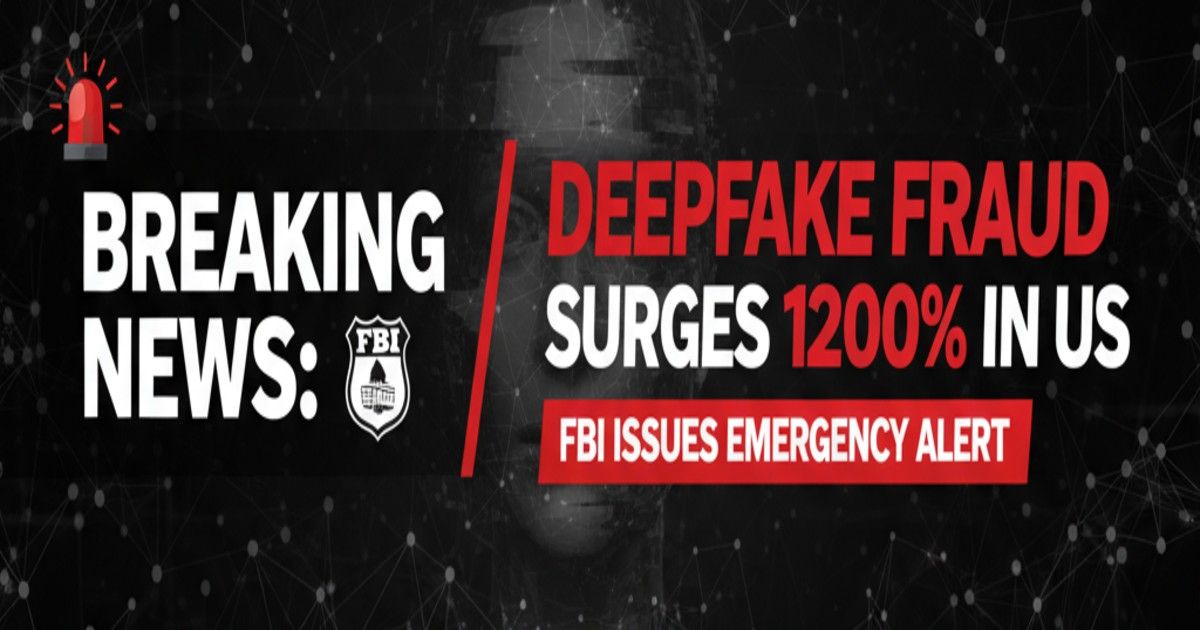
Deepfake technology and synthetic identity engineering represent an escalating operational threat to commercial enterprises, financial institutions, and individual consumers across North America. Federal law enforcement agencies report an unprecedented surge in deepfake fraud United States cases, with cybercrime cartels weaponizing generative artificial intelligence to bypass traditional multi-factor authentication and orchestrate high-stakes executive wire fraud.
According to comprehensive threat advisories published by the FBI Internet Crime Complaint Center (IC3) and the Federal Trade Commission (FTC), synthetic media is no longer confined to crude social media parodies. The rapid proliferation of deepfake fraud United States operations involves real-time voice cloning, live-rendered video face-swapping, and conversational AI agents to compromise corporate payroll pipelines and siphon millions of dollars from institutional balance sheets.
Understanding Deepfake Fraud and AI-Powered Scams in the United States
Deepfake technology utilizes artificial intelligence and deep neural networks to generate realistic fake audio, video, or synthetic images. Within the growing landscape of deepfake fraud United States incidents, these assets are systematically weaponized for unauthorized financial authorization, corporate espionage, and psychological extortion. Federal intelligence reports indicate that these attack tools have transitioned from academic proofs-of-concept into commercially accessible cybercrime services.
The core mechanisms of synthetic media include:
- Voice Cloning: AI-generated audio synthesizing an individual’s vocal cadence, pitch, and timbre from brief public recordings.
- Video Deepfakes: High-resolution synthetic video mapping target faces onto actors to fabricate visual evidence.
- Image Manipulation: Algorithmic photo alteration to generate fraudulent identity documents and synthetic credentials.
- Real-Time Deepfakes: Interactive streaming filters deployed during live video conferences to conduct unauthorized corporate transactions.
Threat Landscape: How Deepfake Fraud in the United States Operates
The rapid proliferation of consumer-grade generative models has dramatically lowered the operational barrier for executing synthetic identity attacks. Rather than spending weeks reverse-engineering corporate network perimeters, threat actors orchestrating deepfake fraud United States schemes target the human verification layer through multi-modal deception.
Understanding the operational mechanics of how threat actors execute deepfake fraud United States campaigns is vital for deploying effective countermeasures:
| Attack Vector | Adversarial Technology | Primary Target | Organizational Impact |
|---|---|---|---|
| Real-Time Voice Cloning | Neural audio synthesis trained on public earnings calls and podcasts | Corporate treasury teams and family members | Unauthorized wire transfers and urgent bail extortion |
| Executive Video Deepfakes | Real-time face swapping during live virtual conference meetings | Chief Financial Officers (CFOs) and financial controllers | Massive multi-million-dollar capital misallocation |
| Synthetic ID Infiltration | AI-generated identity documents and deepfake facial bypass | Remote employee onboarding and fintech KYC portals | Malicious insider access and corporate espionage |
| Biometric Authentication Bypass | High-fidelity 3D facial projection and voice replay attacks | Automated telephone banking and mobile device unlock | Account takeover and unauthorized credential resets |
Primary Attack Methods and Techniques
According to threat intelligence reports and federal law enforcement analysis, criminals utilize various methods to create and deploy deepfake fraud United States attacks:
1. Voice Cloning Attacks
Criminals use generative audio models to clone voices from public audio samples extracted from social media, corporate webinars, or telephone calls. In contemporary deepfake fraud United States operations, the AI analyzes subtle vocal characteristics to generate synthesized speech from text prompts. These cloned voices are then deployed via caller-ID spoofing to target corporate accountants, finance managers, or vulnerable relatives in urgent distress scenarios.
2. Video Deepfake Attacks
AI-generated video creates convincing synthetic presentations through facial replacement, automated lip-synchronization, and real-time motion capture mapping. Adversaries deploying deepfake fraud United States campaigns use these assets in simulated press releases, executive announcements, and video calls to deceive internal stakeholders.
3. Social Engineering with Deepfakes
Criminal syndicates combine deepfakes with targeted social engineering tactics, including:
- CEO Impersonation: Deceiving mid-level finance personnel into bypassing established accounting controls to fund urgent commercial acquisitions.
- Family Emergency Scams: Targeting elderly consumers with cloned voices of grandchildren claiming urgent legal or medical distress.
- Business Email Compromise (BEC): Coordinating synthetic voice follow-ups to validate fraudulent email wire transfer requests.
4. Real-Time Deepfake Video Conferences
Advanced attacks deploy live video filters during scheduled corporate calls. The synthetic persona conducts interactive conversations, directs financial disbursements, and abruptly disconnects citing connectivity errors before graphical artifacts expose the deception.
For an overarching architectural blueprint on mitigating autonomous synthetic agents across enterprise pipelines, consult our definitive AI Cyber Threats and Agentic Security Guide.
Comprehensive Protection Strategies: Immediate, Medium, and Long-Term
Deploying effective protection against deepfake fraud United States operations requires an integrated framework combining procedural verification, technological controls, and ongoing employee training:
Immediate Protection Measures (Implement This Week)
- Multi-Channel Verification: Mandate that any financial transfer requested via phone or video must be verified through a secondary, independent communication channel.
- Strict Callback Procedures: Always disconnect incoming calls requesting sensitive action and redial the verified internal extension or official corporate number. Never trust inbound caller ID.
- Pre-Shared Code Words: Establish confidential, offline verbal verification phrases known exclusively to executive leadership and authorized financial controllers to neutralize deepfake fraud United States risks.
- Dual-Custody Approvals: Enforce mandatory dual-authorization protocols for any capital transfer exceeding established baseline thresholds.
Medium-Term Improvements (Next 30 Days)
- Deepfake Detection Software: Deploy specialized enterprise software capable of inspecting video and audio streams for synthetic compression anomalies and facial boundary jitter.
- Phishing-Resistant MFA: Deprecate telecommunications-based OTPs and voice-prompt approvals in favor of hardware FIDO2 security keys (such as YubiKeys).
- Policy and Governance Overhaul: Formalize clear corporate policies explicitly prohibiting wire transfer execution based solely on audio or video communications.
- Synthetic Attack Simulations: Conduct controlled deepfake social engineering drills to evaluate workforce recognition and response readiness against emerging deepfake fraud United States vectors.
Long-Term Strategic Improvements (Next 90 Days)
- Behavioral Analytics (UEBA): Integrate User and Entity Behavior Analytics into corporate SIEM pipelines to detect anomalous session patterns following executive video interactions.
- Zero-Trust Identity Architecture: Eliminate implicit trust across corporate networks, requiring continuous contextual validation for all administrative privileges.
- External Security Audits: Engage accredited third-party cybersecurity teams to conduct comprehensive threat assessments and penetration testing against identity verification systems.
Federal Response and Enforcement Resources
Federal law enforcement agencies maintain dedicated divisions to investigate deepfake fraud United States syndicates and assist impacted organizations:
FBI Cyber Division & IC3
The FBI Cyber Division coordinates nationwide investigations into AI-powered financial fraud:
- FBI Internet Crime Complaint Center: Submit formal incident complaints directly to www.ic3.gov.
- Emergency Contact: Contact local FBI field offices or call 1-800-CALL-FBI (1-800-225-5324) for active, large-scale financial extortion linked to deepfake fraud United States threats.
Federal Trade Commission (FTC)
The FTC provides regulatory oversight, consumer restitution resources, and statutory guidance:
- Consumer Guidance: Access consumer alerts and identity recovery resources at www.consumer.ftc.gov.
- Fraud Reporting: File official consumer fraud complaints via reportfraud.ftc.gov.
CISA Cybersecurity Resources
The Cybersecurity and Infrastructure Security Agency provides continuous threat telemetry for public and private infrastructure:
- Threat Telemetry: Review active advisories at CISA Cybersecurity Advisories.
- 24/7 Operations Desk: Contact CISA emergency operations at 1-888-282-0870 or email
central@cisa.dhs.gov.
Incident Response Protocol: First 24 Hours
If an enterprise suspects an active compromise stemming from deepfake fraud United States attacks, execute this structured emergency response sequence:
- Step 1: Detection and Financial Freezes (Hours 0-2): Immediately contact sending and receiving financial institutions. Request an emergency SWIFT recall under the FBI Financial Fraud Kill Chain (FFKC) protocol to freeze uncollected funds in mule accounts.
- Step 2: Technical Containment (Hours 2-6): Isolate affected endpoints, revoke active session tokens, reset compromised single sign-on credentials, and preserve all relevant communication recordings and email headers for forensic investigation.
- Step 3: Law Enforcement Reporting (Hours 6-12): File emergency reports with the FBI IC3 and local law enforcement agencies, providing transaction routing numbers, timestamped audio/video files, and caller metadata regarding the deepfake fraud United States incident.
- Step 4: Stakeholder Notification (Hours 12-24): Engage corporate legal counsel, notify internal executive leadership, and prepare regulatory disclosures compliant with federal and state data breach reporting mandates.
Best Practices by Stakeholder Profile
For Commercial Businesses
Enforce strict separation between communication channels and financial execution systems. Require in-person or out-of-band cryptographic validation for all vendor account alterations and corporate disbursements. Mandate ongoing awareness training focusing on synthetic video and audio indicators.
For Individual Consumers
Establish a family emergency verification phrase known only to close relatives. Never send money, cryptocurrency, or gift cards in response to an urgent phone call claiming a loved one is injured or arrested without first hanging up and calling them directly on their known personal number.
For Financial Institutions
Deprecate legacy voice biometric telephone banking authentication. Deploy multi-layered behavioral analysis on video banking platforms and require in-person branch verification or cryptographic hardware token approvals for high-value account transfers to stop deepfake fraud United States exploitation.
Red Flags That Indicate Deepfake Fraud
Defenders and consumers should maintain acute vigilance for these common synthetic media indicators:
- Artificial Urgency: Demands for immediate, secretive capital wire transfers to avoid catastrophic corporate or legal consequences.
- Visual Anomalies: Inconsistent lighting across facial features, unnatural eye blinking patterns, or warping artifacts around the mouth and jawline during speech.
- Acoustic Inconsistencies: Robotic tone modulation, unnatural pauses, or complete absence of contextual background ambient noise during phone calls.
- Process Bypass Requests: Explicit instructions to circumvent standard compliance reviews or corporate procurement channels.
Related guide: For broader context and related coverage, see our personal and small-business cybersecurity guide.
Frequently Asked Questions (FAQ)
What is deepfake fraud in the United States?
Deepfake fraud in the United States encompasses cybercrime operations where threat actors deploy artificial intelligence to synthesize realistic audio, video, or synthetic personas to deceive businesses and consumers into authorizing fraudulent financial transactions or exposing confidential data.
How do cybercriminals clone an executive’s voice?
Adversaries scrape high-fidelity audio samples from public video presentations, corporate webinars, and earnings calls. Generative audio neural networks analyze vocal pitch, cadence, and timbre, producing a voice model capable of generating real-time speech from typed text prompts.
Can traditional antivirus software detect deepfake attacks?
No. Deepfake fraud operates at the social engineering layer through legitimate communication channels (such as Zoom, Microsoft Teams, or telephone calls). Conventional endpoint antivirus scanners cannot evaluate the authenticity of video feeds or audio signals, requiring organizations to enforce procedural verification protocols and cryptographic hardware keys.
How do I report deepfake fraud to federal authorities?
Immediately file a detailed report with the FBI Internet Crime Complaint Center at www.ic3.gov, and submit consumer fraud documentation to the Federal Trade Commission at reportfraud.ftc.gov. For critical infrastructure incidents, contact CISA at central@cisa.dhs.gov.
Conclusion: Neutralizing Synthetic Deception with Zero Trust
The acceleration of deepfake fraud United States demonstrates that seeing and hearing are no longer sufficient baselines for digital identity verification. As artificial intelligence models continue to advance in realism and accessibility, enterprise resilience depends entirely on architectural rigor.
By enforcing out-of-band secondary verification, multi-signature transaction controls, and phishing-resistant authentication, organizations can insulate critical financial infrastructure from synthetic deception and ensure operational continuity in an AI-driven threat environment.
Reported by CyberUpdates365 Threat Intelligence Desk. Delivering actionable research on synthetic media defense, federal cyber law enforcement directives, and enterprise identity architecture.