Special Investigative Report | Published: January 06, 2026 | Reading Time: 8 Minutes
NEW DELHI — As we navigate the first week of 2026, the digital landscape has shifted from a convenience to a potential minefield. While India’s technological infrastructure has reached new heights, so has the ingenuity of the global cyber-underworld. In a startling disclosure, security agencies have revealed that cyber-frauds in the country have evolved beyond simple data theft into sophisticated Psychological Warfare.
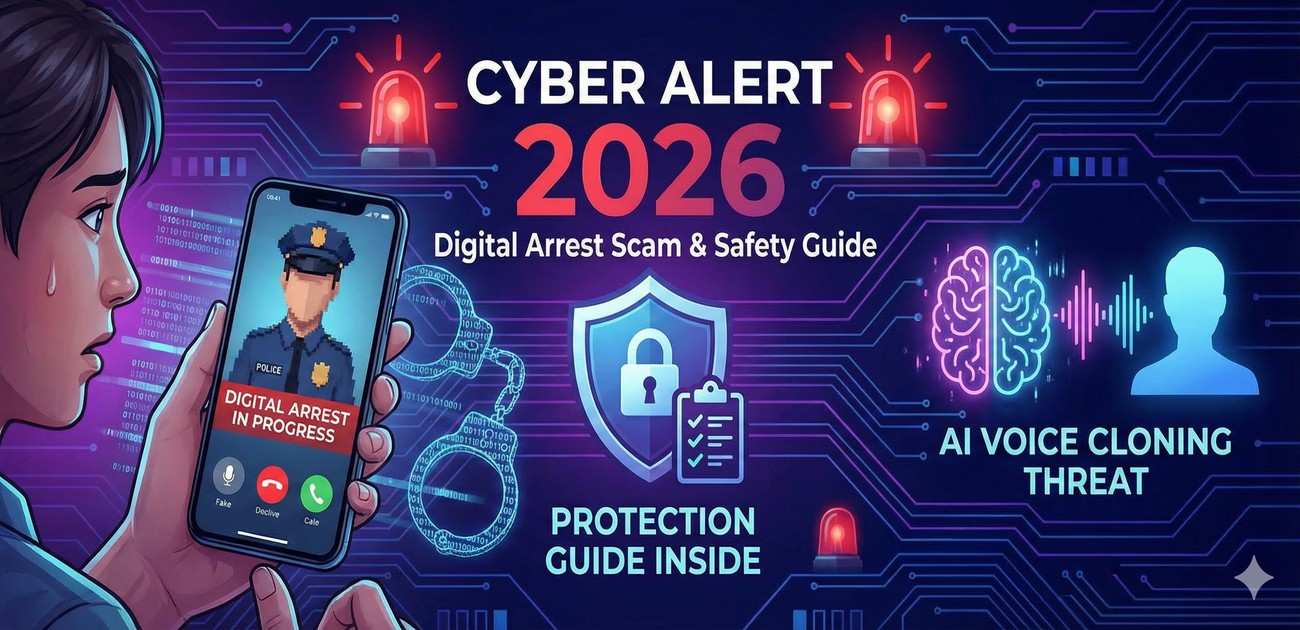
The primary weapon of choice for 2026? The ‘Digital Arrest’—a scam so convincing that even high-profile professionals and tech-savvy individuals are falling prey to it. This report dives deep into the mechanics of these crimes and provides an exhaustive blueprint for digital survival.
1. The Anatomy of a ‘Digital Arrest’: Fear as a Service
Unlike traditional phishing, where a victim clicks a malicious link, the ‘Digital Arrest’ scam begins with a phone call that creates an immediate sense of panic. Scammers pose as officers from the Central Bureau of Investigation (CBI), Narcotics Control Bureau (NCB), or specialized Cyber Cells.
The victim is told that their Aadhaar number or a mobile number registered in their name has been linked to a crime—usually involving money laundering or the shipment of illegal narcotics. To “investigate” the matter, the victim is forced onto a video call. This is where the 2026 evolution happens: using high-definition AI-generated backgrounds, scammers recreate a 100% realistic police station environment, complete with official logos, uniforms, and background noises of police wireless sets.
Under the threat of a “Digital Arrest,” victims are coerced into staying on camera for 24 to 48 hours, disconnected from their families, while the scammers move money from the victim’s bank accounts under the guise of “verification” or “bail deposits.”
Expert Insight: “The goal is isolation. By keeping the victim on a continuous video call, scammers prevent them from thinking clearly or seeking help from real authorities,” says a senior cybersecurity consultant.
2. AI Voice Cloning and Deepfakes: The 2026 Threat Multiplier
Artificial Intelligence has fundamentally changed the nature of trust in 2026. Criminals are now using AI Voice Cloning to bypass the most basic security layer: your voice. With just a 15-second clip of a person’s voice—often harvested from a social media post or a reels video—scammers can generate an infinite number of fake messages.
The ‘Relative in Distress’ scam has become the most successful AI-driven fraud this year. Parents receive calls where they hear the exact voice of their child crying, claiming they have been arrested or involved in an accident. The emotional trauma caused by these high-fidelity clones makes it nearly impossible for the victim to question the authenticity of the call before transferring funds via UPI.
3. The UPI Fraud Landscape: QR Codes and Screen Sharing
Despite years of awareness campaigns, UPI-related frauds remain the highest in volume. In 2026, these have taken the form of ‘Prepaid Task Scams’ and ‘Screen Sharing Hijacks.’
- Prepaid Task Scams: Victims are lured with promises of earning money by simply liking YouTube videos or rating hotels. After a few small payouts to build trust, they are asked to “invest” larger sums, which are then stolen.
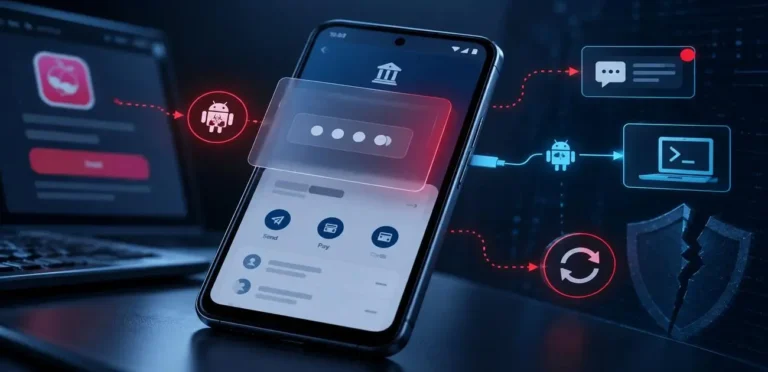
- Remote Access: Fraudsters posing as “Bank Support” ask victims to download apps like AnyDesk or RustDesk to fix a pending transaction. Once installed, the criminal has full visibility of your phone screen, including OTPs and banking passwords.
2026 Cybersecurity Manifesto: Your 5-Step Protection Plan
In a world of evolving threats, your safety depends on these five non-negotiable rules:
Rule 1: Verify the Authority
No Indian government official is authorized to conduct an investigation or arrest via WhatsApp, Skype, or Zoom. If anyone threatens you with a ‘Digital Arrest,’ hang up immediately. The real police will send you a physical summons or visit your registered address.
Rule 2: The “Receive” Law
Never enter your UPI PIN to receive money. If a buyer or a stranger tells you that scanning a QR code is necessary to get a refund or a payment, it is a fraud. PINs are only for sending money out of your account.
Rule 3: Establish a Family ‘Safe Word’
To combat AI Voice Cloning, create a secret “Safe Word” known only to your immediate family members. If you receive a call about an emergency, ask for the safe word. This is the only way to distinguish a human from a machine in 2026.
Rule 4: Zero Screen Sharing
Never share your screen with anyone you do not know personally. Modern screen-sharing apps can record your screen even if you think the app is “minimized.” If a stranger asks you to download an app, treat it as a threat.
Rule 5: The Golden Hour Reporting
If you lose money, every second counts. Reporting the fraud within the first 120 minutes—the ‘Golden Hour’—significantly increases the chances of the bank freezing the stolen funds before the criminal can withdraw them.
Quick Reference: Identifying 2026 Scams
| Scam Type | Common Red Flag | Immediate Action |
|---|---|---|
| Digital Arrest | Request to stay on video call for hours. | Disconnect & Block number. |
| AI Voice Clone | Relative calling from unknown number. | Ask for a family secret word. |
| UPI Refund Fraud | Asking to enter PIN to “Accept” money. | Do NOT enter PIN/Scan QR. |
| Task Scams | Promises of money for “Liking” videos. | Ignore “Prepaid” requests. |
EMERGENCY HELPLINE
If you have been cheated, immediately call: 1930
Or report the crime at www.cybercrime.gov.in
Share this article with your family and elderly members to protect them from the evolving digital threats of 2026.