⚠️ MAJOR CLOUD OUTAGE ALERT ⚠️
October 20, 2025 – Amazon Web Services Disruption
Global internet services affected by AWS infrastructure failure
Major websites and applications offline worldwide
Key Facts
What Happened:
- Amazon Web Services (AWS) experienced major outage on October 20, 2025
- Outage originated from US-EAST-1 data center in Northern Virginia
- Network health monitoring system failure caused DNS issues
- DynamoDB API affected, impacting user data storage
- Global impact from London to Tokyo affecting millions of users
- Services restored by Monday afternoon with message backlogs
Who’s Affected:
- Snapchat users experiencing service disruptions
- Reddit platform users unable to access content
- Venmo digital wallet users facing transaction issues
- Zoom video calling platform users experiencing connectivity problems
- Businesses relying on AWS cloud infrastructure
- Healthcare systems using AWS services
- Financial institutions with AWS dependencies
- Educational institutions using cloud-based systems
Immediate Impact:
- Major websites and applications offline globally
- Digital payment systems disrupted
- Video conferencing platforms affected
- Business operations halted for AWS-dependent companies
- User data access issues across multiple platforms
- Communication systems disrupted worldwide
The Outage Explained
As of October 20, 2025, Amazon Web Services experienced a significant AWS outage United States that caused widespread internet disruptions globally. The outage originated from AWS’s US-EAST-1 data center in Northern Virginia, which has historically been a source of similar infrastructure problems.
The root cause was identified as a network health monitoring system failure that affected AWS’s Domain Name System (DNS). This DNS disruption prevented proper resolution of DynamoDB API addresses, which are critical for storing user information and other essential data across AWS services.
According to AWS’s incident report, the outage impacted users from London to Tokyo, disrupting daily operations including digital wallet transactions through Venmo and video calling services on Zoom. While AWS restored services by Monday afternoon, some services experienced message backlogs that took several hours to fully process.
Technical Analysis
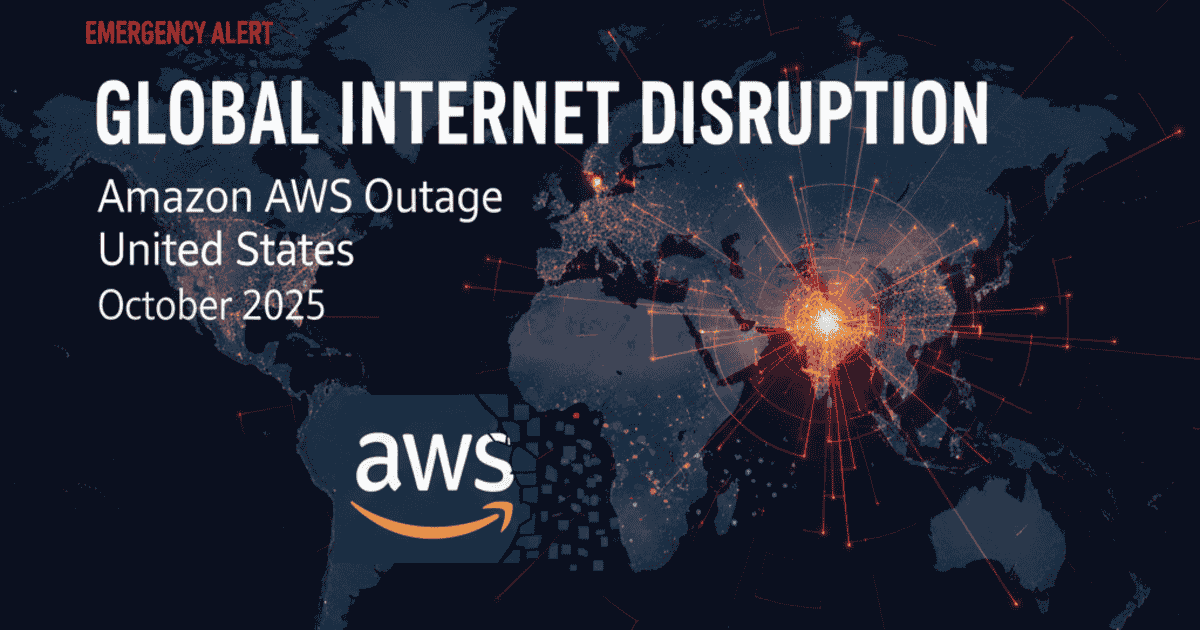
AWS outage screenshot showing global service disruption patterns and affected regions during the October 21, 2025 infrastructure failure.
Root Cause Analysis:
- Network Monitoring Failure: AWS’s network health monitoring system malfunctioned
- DNS Resolution Issues: Domain Name System unable to resolve DynamoDB API addresses
- US-EAST-1 Dependency: Critical infrastructure concentrated in Northern Virginia data center
- Cascade Effect: Single point of failure affecting multiple AWS services
The outage demonstrates the critical importance of AWS’s US-EAST-1 region, which serves as a primary infrastructure hub for many global services. The DNS resolution failure prevented applications from connecting to DynamoDB, causing widespread service disruptions across platforms that depend on this database service.
This incident highlights the risks associated with cloud concentration, where multiple services depend on a single cloud provider’s infrastructure. The outage affected not only AWS’s direct customers but also end users of popular applications and websites.
Impact Assessment
The AWS outage United States represents one of the most significant internet disruptions since the CrowdStrike malfunction of the previous year, which affected hospitals, banks, and airport technology systems.
Global Business Impact:
- E-commerce platforms unable to process transactions
- Digital payment systems experiencing delays
- Video conferencing services disrupted for remote workers
- Social media platforms experiencing connectivity issues
- Cloud-based business applications offline
User Experience Impact:
- Millions of users unable to access favorite applications
- Digital wallet transactions delayed or failed
- Video calls dropped or unable to connect
- Social media interactions disrupted
- Online shopping experiences affected
Economic Consequences:
- Business productivity losses due to service disruptions
- Revenue losses for AWS-dependent companies
- Customer service challenges for affected businesses
- Potential data loss or corruption in some systems
- Reputation damage for affected service providers
AWS’s Response
AWS has acknowledged the severity of the October 20, 2025 outage and provided detailed technical explanations for the root cause. The company has implemented additional monitoring and redundancy measures to prevent similar incidents in the future.
According to AWS’s official incident report, the company has enhanced its network health monitoring systems and improved DNS resolution capabilities. AWS has also committed to better communication during future incidents and faster recovery procedures.
The company has emphasized its commitment to maintaining high availability standards and has provided affected customers with detailed post-incident reports and recommendations for improving their own resilience strategies.
Lessons Learned
This incident provides several important lessons for organizations and cloud service providers:
For Businesses:
- Multi-Cloud Strategy: Consider diversifying across multiple cloud providers
- Redundancy Planning: Implement backup systems for critical operations
- Incident Response: Develop comprehensive outage response procedures
- Customer Communication: Establish clear communication channels during disruptions
- Data Backup: Maintain offline backups of critical data
For Cloud Providers:
- Infrastructure Redundancy: Reduce dependency on single data centers
- Monitoring Systems: Implement robust health monitoring across all regions
- DNS Resilience: Enhance DNS resolution capabilities and backup systems
- Communication: Improve real-time status updates during incidents
- Recovery Procedures: Develop faster incident response and recovery protocols
Prevention Strategies
Organizations can implement several strategies to minimize the impact of future cloud outages:
Immediate Actions:
1. Multi-Cloud Architecture:
- Distribute workloads across multiple cloud providers
- Implement failover mechanisms between cloud services
- Use cloud-agnostic technologies where possible
- Maintain data synchronization across providers
2. Enhanced Monitoring:
- Implement comprehensive monitoring across all cloud services
- Set up automated alerts for service disruptions
- Monitor DNS resolution and network connectivity
- Track application performance metrics in real-time
3. Business Continuity Planning:
- Develop detailed incident response procedures
- Create offline backup systems for critical operations
- Establish alternative communication channels
- Train staff on outage response procedures
Future Outlook
The October 20, 2025 AWS outage highlights several critical issues in cloud infrastructure:
Cloud Concentration Risks:
- Single points of failure in cloud infrastructure
- Dependency on major cloud providers
- Limited alternatives for critical services
- Need for better cloud diversity strategies
Infrastructure Improvements:
- Enhanced monitoring and alerting systems
- Improved DNS resolution capabilities
- Better geographic distribution of services
- More robust backup and recovery systems
Industry Response:
- Increased focus on cloud resilience
- Development of multi-cloud strategies
- Enhanced monitoring and alerting tools
- Improved incident response procedures
Emergency Resources
For organizations affected by cloud outages:
AWS Support:
- AWS Support Center: console.aws.amazon.com/support
- Service Health Dashboard: status.aws.amazon.com
- Emergency Hotline: 1-800-AMAZON (1-800-262-9666)
- Technical Support: Available through AWS Support plans
Alternative Cloud Providers:
- Microsoft Azure: azure.microsoft.com
- Google Cloud Platform: cloud.google.com
- IBM Cloud: ibm.com/cloud
- Oracle Cloud: oracle.com/cloud
Government Resources:
- CISA Cloud Security: cisa.gov/cloud-security
- NIST Cloud Computing: nist.gov/cloud-computing
- FBI Cyber Division: fbi.gov/investigate/cyber
Key Takeaways
- AWS outage on October 20, 2025 affected global internet services
- Root cause: Network health monitoring system failure affecting DNS
- US-EAST-1 data center in Northern Virginia was the source
- Major platforms like Snapchat, Reddit, Venmo, and Zoom affected
- Services restored by Monday afternoon with message backlogs
- Largest internet disruption since previous CrowdStrike incident
- Highlights risks of cloud concentration and single points of failure
Final Recommendations
Immediate Actions:
- Assess your organization’s dependency on AWS services
- Implement multi-cloud strategies where possible
- Enhance monitoring and alerting systems
- Develop comprehensive incident response procedures
- Create offline backup systems for critical operations
Long-Term Strategy:
- Diversify cloud infrastructure across multiple providers
- Implement robust business continuity planning
- Enhance monitoring and alerting capabilities
- Regular testing of disaster recovery procedures
- Staff training on cloud outage response
This article was last updated on October 20, 2025, at 4:00 PM EST. Information is based on verified reports from AWS’s official incident reports and global service status updates. Always check AWS Service Health Dashboard for the latest updates.
Disclaimer: This article provides technical information based on verified sources. Always consult with qualified IT professionals before making infrastructure changes. For enterprise environments, consult with your IT department before implementing any solutions.CyberUpdates365