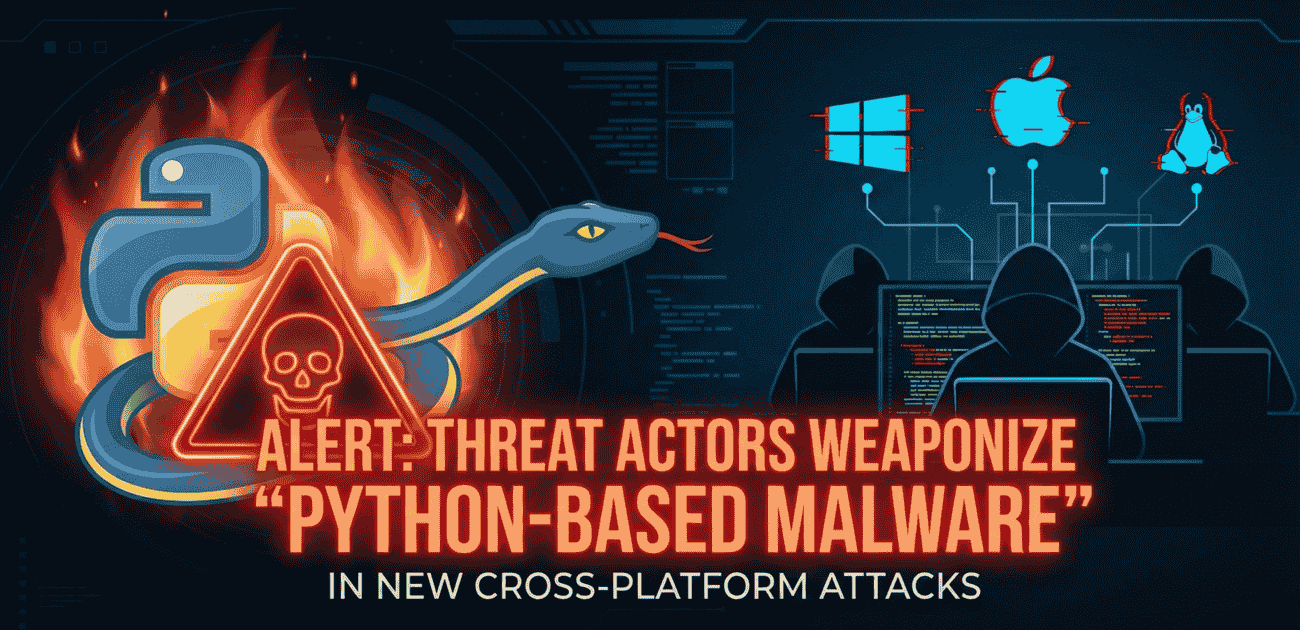
Cybersecurity researchers have flagged a significant surge in Python-based malware campaigns. Threat actors are leveraging the language’s versatility to launch sophisticated, cross-platform attacks targeting Windows, Linux, and macOS systems. This trend mirrors recent alerts where the GitHub Ecosystem Faces Critical Cyber Threats due to malicious code injection.
CRITICAL SECURITY WARNING
Threat actors are actively exploiting the “portability” of Python to evade antivirus signatures. Since Python code can run on any system with the interpreter installed, these attacks are highly effective. Security Teams: Ensure your EDR is configured to monitor python.exe and script execution behaviors, not just static files.
As of November 2025, a new wave of attacks demonstrates how hackers are using Python scripts to bypass traditional detection. By utilizing tools like PyInstaller, attackers convert malicious scripts into standalone executables. Consequently, this hides the source code and dependencies, making analysis significantly harder for security vendors.
Furthermore, the shift towards Python is strategic. Unlike compiled languages (C/C++), Python scripts are easy to obfuscate and deploy across hybrid cloud environments. Recent incidents involve ransomware groups and APTs using these lightweight scripts to maintain persistence before deploying heavier payloads, a tactic similar to how North Korean Hackers Unveil Advanced Backdoor Tools.
KEY FACTS: THE PYTHON MALWARE THREAT
WHAT HAPPENED:
- The Trend: A sharp increase in Python-based malware designed to infiltrate cloud and on-premise networks.
- The Tools: Hackers use legitimate tools like PyInstaller and Py2Exe to package malware as trusted binaries.
- Latest Discovery: Researchers at K7 Labs found malware injecting .pyc fragments into the legitimate
cvtres.exeprocess. - Stealth: The malware operates in-memory to evade disk scanning and communicates with C2 servers undetected.
IMPACT ON ORGANIZATIONS:
- Detection Gap: Many legacy security tools trust Python processes, missing the malicious behavior running in the background.
- Supply Chain Risk: Attackers are poisoning open-source repositories (PyPI) to distribute these scripts.
- Persistence: Simple Python scripts are used to create Cron jobs or Scheduled Tasks, keeping the threat actor inside the network indefinitely.
TABLE OF CONTENTS
- The Rise of Python-Based Malware Campaigns
- Latest Discovery: Hiding in cvtres.exe
- Technical Analysis: PyInstaller and Obfuscation
- Expert Analysis on Cross-Platform Threats
- Mitigation Strategies for Python Threats
- Frequently Asked Questions (FAQ)
THE RISE OF PYTHON-BASED MALWARE CAMPAIGNS
Recently, security experts have observed that threat actors are moving away from custom binary malware. Instead, they are adopting Python-based malware due to its ease of use and broad compatibility. For instance, recent campaigns like ShadowRay and RansomHub have utilized Python backdoors to compromise cloud workloads.
The primary advantage for attackers is speed. A script written in Python can be deployed on a Linux server today and a Windows laptop tomorrow with minimal changes. Moreover, the extensive library support in Python allows hackers to implement complex networking and encryption functions with just a few lines of code.
LATEST DISCOVERY: HIDING IN CVTRES.EXE
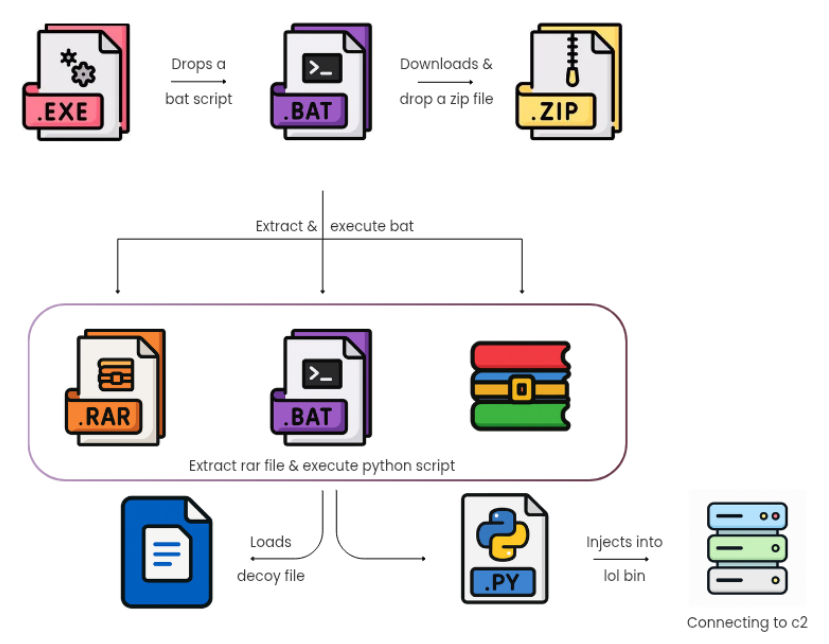
In a groundbreaking discovery, researchers from K7 Security Labs have uncovered a sophisticated technique where threat actors are using hidden .pyc (compiled Python) fragments to inject malicious code into legitimate Windows processes.
⚠️ The “Masked in Memory” Attack:
The malware utilizes cvtres.exe (Microsoft Resource Compiler Tool), a standard Windows component, to communicate with its Command and Control (C2) server. By injecting the malicious Python bytecode into this trusted process, the attackers successfully hide their network traffic from standard firewalls, which typically allow cvtres.exe to run.
This technique represents a significant evolution in Python-based malware evasion, moving from simple script execution to advanced Process Injection and memory-only payloads.
TECHNICAL ANALYSIS: PYINSTALLER AND OBFUSCATION
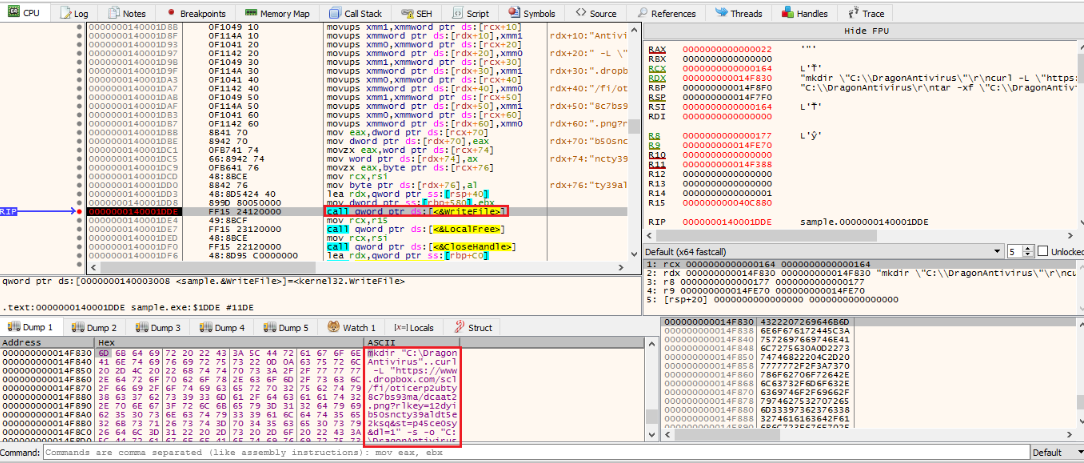
Technically, the core of this threat lies in how the malware is packaged and executed. Here is the typical attack lifecycle observed in these campaigns:
Execution Flow:
- 1. Packaging: The attacker writes the malware in Python and uses PyInstaller to bundle it into a single
.exeor ELF binary. - 2. Injection: As seen in the report, the malware unpacks a
.pycfragment and injects it into a legitimate process likecvtres.exe. - 3. Execution: The trusted process executes the malicious code in memory, leaving no trace on the hard disk (Fileless Malware).
- 4. Evasion: Because the network traffic originates from a trusted Windows tool, security alerts are often suppressed.
Obfuscation Techniques
To further complicate analysis, attackers use tools like PyArmor. This encrypts the bytecode, preventing researchers from simply reverse-engineering the script to see what it does. Consequently, defenders must rely on behavioral analysis rather than static code analysis.
EXPERT ANALYSIS ON CROSS-PLATFORM THREATS
“Python is no longer just for developers. It has become a weapon of choice for cybercriminals targeting hybrid environments. The recent abuse of cvtres.exe to hide Python payloads shows that attackers are finding new ways to ‘Live off the Land,’ similar to how Chinese Hackers Breached US Agencies using evasion techniques.”
– Threat Intelligence Lead, CyberUpdates365
MITIGATION STRATEGIES FOR PYTHON THREATS
FOR ENTERPRISES & IT ADMINS
IMMEDIATE ACTIONS:
- Monitor Process Injection: Use EDR tools to detect if a process like
cvtres.exeorrundll32.exeis making unexpected external network connections. - Scan for “Frozen” Binaries: Look for large executables that unpack into
%TEMP%folders with_MEInaming conventions. These are often unsigned PyInstaller files. - Restrict Interpreter Usage: Limit which users can run Python interpreters on production servers. If a server does not need Python, remove it to reduce the attack surface.
LONG-TERM DEFENSE:
- Supply Chain Security: Use tools to scan Python dependencies (pip packages) for known vulnerabilities or malicious code before installation. This is crucial as Supply Chain Cyber Attacks Have Surged 250% this year.
- Patch AI Frameworks: Ensure that frameworks like Ray, PyTorch, and TensorFlow are patched, as these are frequent entry points for Python scripts.
FREQUENTLY ASKED QUESTIONS (FAQ)
What is Python-based malware?
It is malicious software written in the Python programming language. Hackers use it because it can run on Windows, Linux, and macOS, and is easy to hide from antivirus programs.
What is the “cvtres.exe” attack?
Recent reports indicate that hackers are hiding malicious Python code inside the legitimate Windows “cvtres.exe” process. This allows them to communicate with their servers without triggering firewall alarms.
How do I detect PyInstaller malware?
PyInstaller malware often creates temporary folders starting with _MEI in your Temp directory. Monitor your system for unsigned binaries creating these folders and making network connections.
EMERGENCY RESOURCES & REPORTING
Report Cybersecurity Incidents:
CISA (USA):
- Website: www.cisa.gov/report
- For: Reporting malware analysis and obtaining technical assistance.
RELATED ARTICLES ON CYBERUPDATES365
- READ NOW: Chinese Hackers Breach Multiple US Government Agencies
- ALERT: Supply Chain Cyber Attacks Surge 250% – CISA Directive
- TRENDING: 2025 Cybersecurity Threats: AI-Powered Attacks
- DEVELOPER ALERT: GitHub Ecosystem Faces Critical Cyber Threat
- ENTERPRISE HUB: 2026 Enterprise CVE & Vulnerabilities Security Hub
KEY TAKEAWAYS & FINAL THOUGHTS
The rise of Python-based malware indicates a shift in the threat landscape towards cross-platform, stealthy attacks. Threat actors are successfully leveraging the very tools developers love to compromise networks globally.
Critical Points to Remember:
- Versatility: Python malware targets Windows, Linux, and macOS simultaneously.
- Evasion: Tools like PyInstaller and
cvtres.exeinjection allow malware to bypass static antivirus signatures. - Defense: Organizations must adopt behavioral monitoring to detect malicious script execution.
Stay Protected with CyberUpdates365
Subscribe for real-time cybersecurity alerts, expert analysis, and actionable security guidance delivered directly to your inbox.
Join 10,000+ cybersecurity professionals and business leaders staying ahead of emerging threats.
Updated on November 24, 2025 by CyberUpdates365 Editorial Team