
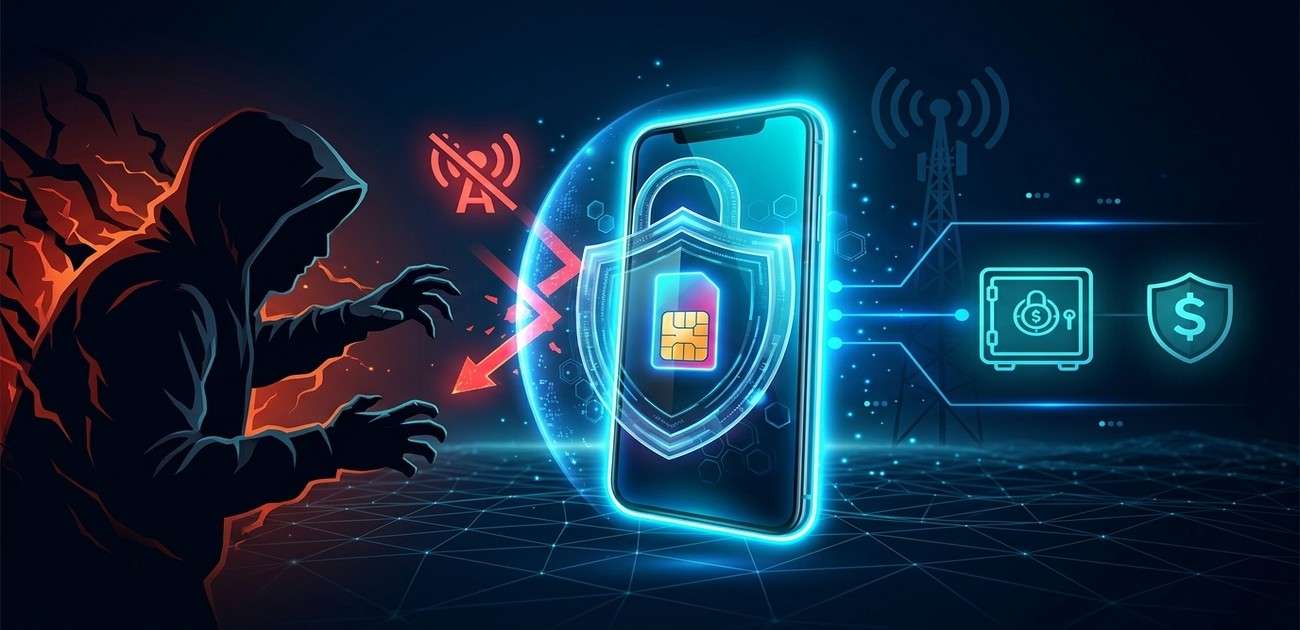
Mastering how to prevent sim swap attacks has become an urgent financial survival requirement as cybercriminals aggressively exploit telecommunications infrastructure to siphon banking reserves. When unauthorized port-out scams redirect your primary cellular number, traditional password barriers collapse instantly, leaving personal digital identities entirely exposed to automated account takeover operations.
I understand the severe disorientation and fiscal terror that individuals and enterprise directors experience upon awakening to a disconnected smartphone and emptied investment accounts. Here is my technical defense assurance: by analyzing this telecommunications hardening manual, you will understand the precise operational anatomy of cellular account hijacking, configure immutable carrier port locks across major network networks, and deploy cryptographically resilient multi-factor authentication across your financial architecture.
In this technical breaking exploration, we examine how threat syndicates impersonate subscriber profiles, document step-by-step carrier SIM locking instructions complying with recent Federal Communications Commission (FCC) port-out regulations, and provide a verified remediation workflow for active compromise attempts. This analytical framework integrates verified fraud bulletins published by authoritative enforcement channels, including official warnings from the Federal Bureau of Investigation (FBI) SIM Swapping Threat Advisory. To fortify your connected mobile and operational hardware against multi-stage intrusions, combine this guidance with our canonical analysis on Detecting and Terminating Remote Phone Hacks, inspect local password vulnerability risks via our investigative report covering How to Find Passwords on iPhone, and integrate holistic zero-trust defense architectures from our central 2026 Small Business & Consumer Cyber Security Defense Vault.
What is SIM Swapping and How Does Cellular Hijacking Work?
A SIM swapping attack occurs when a cybercriminal manipulates mobile telephone carrier staff into transferring an active target subscriber phone number onto an unauthorized physical or programmable eSIM card controlled by the attacker.
Here is the operational mechanics breakdown: unlike traditional hardware theft or physical malware staging, SIM hijacking—also categorized as port-out fraud—exploits human interaction layers within customer support desks at legacy telecom providers like AT&T, T-Mobile, and Verizon. Threat actors assemble detailed personally identifiable information (PII) harvested from illicit dark web data breach exposures, including residential addresses, dates of birth, social security fragments, and billing histories.
Armed with these biographical credentials, the attacker telephones carrier assistance centers or visits retail store locations while impersonating the legitimate account owner. Claiming that their mobile hardware was irrevocably destroyed or lost while traveling, they persuade support agents to authorize an immediate subscriber identity module transfer to an unauthorized replacement SIM card in their possession. The second the carrier switches network provisioning, the legitimate subscriber’s handset goes completely black—dropping into “No Service” or “Emergency Calls Only” modes—while the attacker’s hardware simultaneously illuminates, capturing full control over voice calls and two-factor authentication SMS text packets.
Attack Anatomy: How Hackers Drain Connected Bank Accounts
Once cellular network routing is successfully hijacked, criminals abuse intercepted SMS password recovery tokens to systematically execute unauthorized account takeovers across banking platforms, cryptocurrency exchanges, and corporate email portals.
Let’s examine the attack sequence that follows a port-out compromise: possessing your operational telephone number enables an attacker to circumvent complex passwords without requiring brute-force computing power. The intruder navigates directly to authentication gateways for prominent financial institutions, automated brokerage accounts, and digital currency vaults such as Coinbase or Binance, activating standardized “Forgot Password” or account recovery sequences.
When financial systems prompt the user to confirm identity via SMS one-time passcode (OTP) verification, the short-code confirmation text routes straight to the attacker’s newly authorized device. Within minutes, intruders reset banking authorization credentials, update primary administrative recovery emails to prevent legitimate owner intervention, and initiate irreversible wire transfers or offshore blockchain liquidity withdrawals. This vulnerability exposure is further aggravated by insecure local storage habits; individuals relying upon default plaintext phone notes or vulnerable on-device password managers face catastrophic credential harvesting upon secondary device sync compromise.
Four Primary Defense Controls to Stop SIM Swapping
Establishing effective defense against subscriber identity hijacking requires migrating away from text-based verification protocols, establishing administrative account barriers, and rigorously restricting public biographical data exposures.
Let’s examine the foundational cybersecurity safeguards required to immunize digital identities against telecom fraud. To maintain operational continuity and insulate capital resources from unauthorized port-out attempts, implement the four defensive pillars detailed below:
- Control 1: Eliminate SMS Two-Factor Authentication: Retire cellular text messages as an authorization factor across banking, social media, and communication gateways. Transition immediately to time-based one-time password (TOTP) authenticator applications or dedicated hardware cryptographic keys that function independently of cellular carrier networks.
- Control 2: Establish Carrier Account PIN & Port Freezes: Contact your telecommunication services operator to implement an administrative account freeze and assign a complex, randomized verbal alphanumeric security passcode required before any customer service representative can execute subscriber SIM transfers or account changes.
- Control 3: Minimize Public Biographical Data Leakage: Threat syndicates scrutinize social media timelines to extract common answers to security authentication prompts, including high school names, maternal surnames, and pet titles. Maintain rigorous privacy filtering across social networks and utilize randomized strings for security question fields.
- Control 4: Execute Rapid Incident Notification on Signal Drop: If an active mobile terminal suddenly exhibits unexplained service loss in regions with established signal coverage, treat the anomaly as an active hacking emergency. Connect immediately via trusted Wi-Fi networks or secondary phone lines to order an immediate carrier account freeze.
US Mobile Carrier SIM Lock & Port Freeze Activation Matrix
In response to stringent FCC port-out security mandates enforced in mid-2024, legacy American wireless network providers now equip subscribers with direct, user-controlled SIM locking interfaces across mobile account dashboards.
Here is the carrier implementation breakdown: maintaining active account locks ensures that automated systems reject unauthorized SIM provisioning or number port-out requests until the validated account owner explicitly authenticates inside secure mobile banking style utility software. Consult the comprehensive instructional matrix below to immediately configure port protection across primary domestic telecom providers.
| Carrier Name | Security Feature Title | Direct App Navigation & Activation Path | FCC Protection Mandate Compliance |
|---|---|---|---|
| AT&T Wireless | Wireless Account Lock | myAT&T app → Services → Mobile Security → Wireless Account Lock → Toggle On | Verified Active (Requires 2FA to Lift) |
| T-Mobile | SIM Protection + Port-Out Protection | T-Life App / Web → Account → Privacy → SIM Lock → Toggle On Both Protections | Verified Active (Blocks Port-Out & SIM Swap) |
| Verizon Wireless | SIM Protection + Number Lock | My Verizon App → Account → Security Settings → Enable SIM Protection & Number Lock | Verified Active (Instant Fraud Alerts Enabled) |
Crucially, carrier security locks provide defense solely when left continuously engaged. When legitimately upgrading hardware handsets or transferring subscription coverage to an alternative network, subscribers must temporarily deactivate SIM locking protections—however, these administrative locks must be rigorously re-engaged immediately upon activation completion to close vulnerability windows.
Authentication Security Comparison: SMS vs. App vs. Hardware
Evaluating multi-factor authentication resilience requires analyzing how delivery mechanisms perform under remote interception, social engineering pressure, and sophisticated network routing manipulation.
Let’s examine the cryptographic effectiveness of authentication frameworks: while traditional text verification improves upon standalone passwords, its reliance upon unencrypted public telecom networks renders it vulnerable to SIM swapping and SS7 routing interception. Study the technical comparison matrix below to determine appropriate identity fortification tiers across consumer and enterprise deployments.
| Authentication Mechanism | SIM Swap Resilience | Phishing Interception Risk | Recommended Use Case |
|---|---|---|---|
| SMS / Voice OTP Verification | Zero Resilience (Failed upon Swap) | High (Easily Phished via Proxy) | Low-priority forums and non-sensitive web accounts. |
| TOTP Authenticator Apps | High (Device-Locked Algorithm) | Medium (Susceptible to Real-time Phishing) | Primary consumer banking, cloud email, social platforms. |
| FIDO2 Hardware Keys (YubiKey) | Immune (Hardware Cryptography) | Immune (Domain-Bound Tokens) | Enterprise IT root admin, corporate treasury, crypto treasuries. |
Emergency Remediation: What to Do If Your Phone Loses Service
If an abrupt, inexplicable drop in cellular service indicates an ongoing SIM swapping intrusion, immediately leverage independent Wi-Fi channels to execute synchronized account containments and fraud freezes.
Let’s examine the rapid response protocol: during an active SIM swap, criminals race against the clock to deplete financial balances before the legitimate victim comprehends the network anomaly. To successfully interrupt unauthorized account takeovers and regain control over compromised identities, execute the structured mitigation protocol below in strict chronological sequence:
Mandatory Emergency Response Checkboxes
- Control 1: Contact Carrier via Secondary Line: Immediately dial carrier customer security desks via Wi-Fi calling, Skype, or an associate’s functioning terminal; explicitly declare an ongoing SIM swap fraud attempt and demand an immediate port freeze and network disconnection.
- Control 2: Execute Bank Transaction Freezes: Notify bank debit routing desks, automated crypto exchange compliance officers, and investment firms to initiate an emergency temporary account transaction hold across all linked portfolios.
- Control 3: Purge SMS Account Recovery Tunnels: Log into primary cloud email platforms from a trusted PC computer; instantly revoke linked telephone numbers from account recovery options and substitute hardware security verification keys or secondary offline backup codes.
- Control 4: Inspect Authorized Device Active Sessions: Navigate to account activity dashboards across Google Workspace, Apple iCloud, and Microsoft security settings to manually revoke active Web Session cookies and log out unrecognized hardware profiles.
Frequently Asked Questions (FAQ)
Verified technical explanations addressing common inquiries regarding SIM swap attack mechanics, port-out identification signals, authentication defense hardening, and immediate financial incident containment.
Q: What is a SIM swap scam and how does it compromise mobile accounts?
Answer: A SIM swap scam occurs when a cybercriminal tricks or manipulates a mobile carrier’s customer support agent into reassigning your legitimate telephone number onto a SIM card physically controlled by the attacker, instantly handing them direct interception capabilities over your incoming voice calls, SMS text messages, and security verification codes.
Q: How do cybercriminals acquire personal details required to bypass carrier security?
Answer: Threat syndicates aggregate Personally Identifiable Information (PII)—including social security fragments, residential addresses, and billing dates—from illicit dark web data breach databases, while simultaneously scraping public social media profiles for answers to verification questions such as high school names or pet nicknames.
Q: What is the most immediate observable symptom confirming a SIM swap attack?
Answer: The primary physical symptom is an abrupt, unprompted loss of cellular connection—with your device exhibiting “No Service” or “Emergency Calls Only” status icons within familiar geographic environments possessing historically stable wireless carrier signal coverage.
Q: How can users effectively secure two-factor authentication against SIM hijacking?
Answer: Subscribers must immediately disable SMS text verification across banking and communication accounts, replacing text OTPs with Time-based One-Time Password (TOTP) authenticator software (such as Google Authenticator or Authy) or physical hardware security keys (like YubiKey) that execute cryptography independently of cellular routing networks.
Q: What initial action is critical when an unauthorized SIM swap is detected?
Answer: Immediately connect to Wi-Fi calling or telephone your wireless provider using an associate’s device to declare active port-out fraud and request an immediate number freeze. Subsequently contact financial asset protection desks to block pending wire transactions and reset email recovery passwords from an isolated trusted terminal.
Reported by CyberUpdates365 Threat Intelligence Desk: Delivering authoritative investigative analysis across enterprise security, federal telecom mandates, and financial infrastructure resiliency. To deepen your organizational cybersecurity preparedness across related attack vectors, review our interactive diagnostic manuals on Detecting and Terminating Smartphone Intrusions, credential exposure assessments in our iPhone Password Security Guide, and comprehensive commercial threat defense roadmaps within our central 2026 Small Business & Consumer Cyber Security Defense Vault. All telecom port-out compliance matrices and defensive controls are verified current as of August 2026.