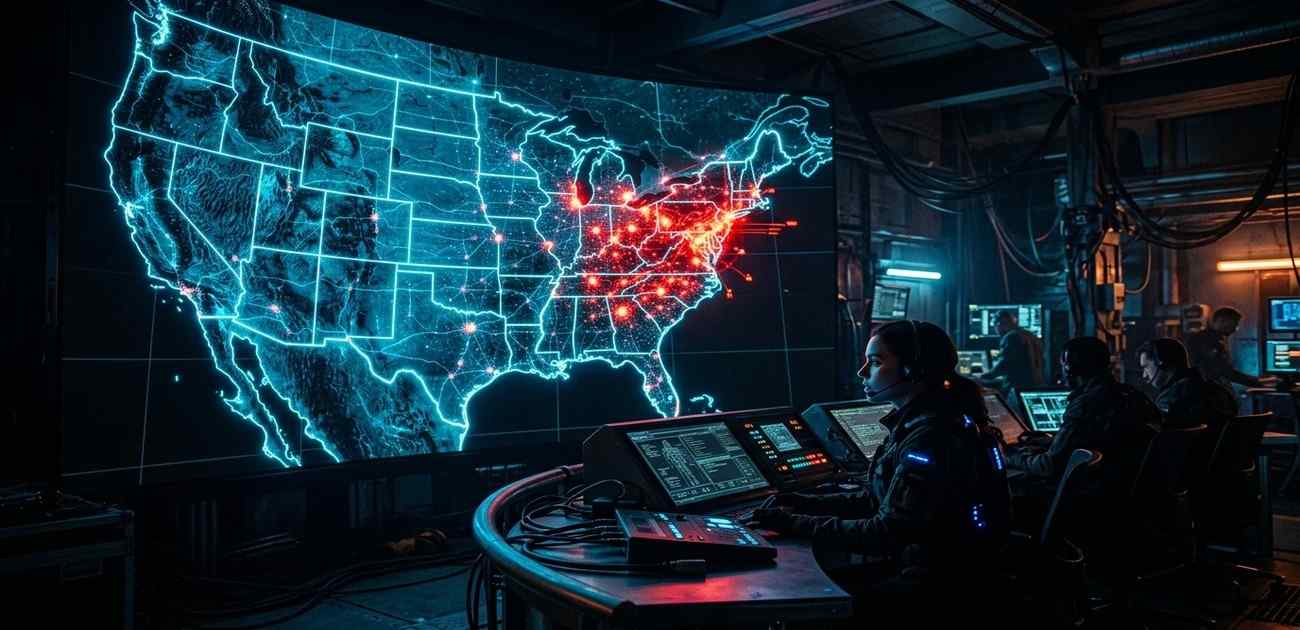
When the government agency responsible for protecting the nation’s cybersecurity gets breached, every corporate board in America pays attention.
The U.S. Department of Homeland Security (DHS) has officially launched an investigation into a major cyber incident discovered in July 2026. Following closely on the heels of the recent DHS HSIN intelligence breach, this new attack occurred within an “unclassified legacy information-sharing environment.”
If you are a US-based enterprise, a defense contractor, or an IT vendor that interacts with federal data, you cannot afford to ignore this. Nation-state actors don’t hack government agencies just to cause chaos; they do it to steal vendor data and pivot into private corporate networks.
Here is what the DHS cyber incident means for your business and how you need to respond today.
The Hidden Reality: The Legacy Trap
Most companies assume that advanced, state-sponsored hackers break into networks using sophisticated zero-day exploits against modern cloud infrastructure. That’s a dangerous myth.
The reality of the DHS breach reveals a truth that 95% of security teams ignore: attackers don’t target your strongest doors. They target the dusty, forgotten backdoor you haven’t checked in a decade.
The DHS attackers compromised a “legacy information-sharing environment.” In the corporate world, this translates to that old on-premise server running an outdated ERP system, or the forgotten FTP server you still use to share files with a legacy vendor. Attackers know that IT teams are too busy focusing on modern cloud security to monitor 15-year-old infrastructure.
The Standard Advice (And Why It Backfires)
Following a massive headline like the DHS incident, the standard advice is to run an immediate vulnerability scan across your entire network and “patch everything.”
This backfires when dealing with legacy systems. You often cannot patch a 15-year-old application without breaking it completely. Furthermore, standard vulnerability scanners frequently crash legacy servers during the scanning process, causing self-inflicted business downtime.
Instead of blindly scanning and patching, you must isolate. You cannot secure what you cannot upgrade, but you can put it in a digital quarantine.
The Edge Cases: The Contractor Domino Effect
Security isn’t an isolated event. If you are a B2B company, your risk is tied to your partners. Consider these edge cases:
- The Federal API Connection: If your company’s software automatically pulls or pushes data to any unclassified federal databases (like background check APIs or tax portals), those connection tokens must be rotated immediately. Hackers inside the DHS network could potentially spoof those APIs.
- The Distraction Tactic: Threat actors often launch high-profile government attacks to dominate the news cycle while simultaneously executing quieter campaigns against private enterprises. Don’t let this news distract you from ongoing threats like the World Cup 2026 AI phishing campaigns currently targeting US executives.
The Advanced Fix: The Legacy Audit Checklist
You need a proactive approach to prevent a “DHS-style” breach in your own company. Run through this checklist to lock down your legacy environments.
- Identify the “Ghosts”: Run a passive network discovery scan to map every device communicating on your network. Flag any operating system older than Windows Server 2016 or outdated Linux kernels.
- Enforce Micro-Segmentation: Place all legacy systems on a highly restricted VLAN. They should only be allowed to communicate with specific, authorized internal IP addresses—never the open internet.
- Deploy Compensating Controls: Since you can’t install modern Endpoint Detection and Response (EDR) on a 20-year-old server, deploy strict network-level intrusion detection rules directly in front of the legacy hardware.
- Verify Zero Trust Architecture: Ensure that accessing the legacy system requires strict MFA and identity verification, adhering to modern Zero Trust principles.
What Happens Next
As the DHS continues its investigation, we can expect a wave of emergency directives (BODs) mandating strict security overhauls for federal contractors.
Don’t wait for the government to tell you to secure your forgotten servers. Treat every legacy system as compromised until proven otherwise.
Related guide: For broader context and related coverage, see our ransomware and critical-infrastructure defense guide.
Frequently Asked Questions
Was classified data stolen in the DHS cyber incident?
According to initial reports, the breach was contained within an “unclassified legacy information-sharing environment.” However, unclassified data often includes sensitive contractor details, architectural blueprints, and internal communications.
How does this breach affect private US businesses?
If attackers stole unclassified vendor data, they can use it to launch highly credible supply-chain attacks or spear-phishing campaigns against the private companies that contract with the DHS.
What is a legacy information-sharing environment?
It typically refers to older, pre-cloud hardware or software platforms used to transfer files, emails, or data between government agencies and third-party partners. Because of their age, they often lack modern authentication controls.
Reported by CyberUpdates365 Desk
Delivering the latest insights on enterprise security, federal AI directives, and the future of IT infrastructure. Follow us for daily updates on how technology is reshaping the corporate landscape.