Menu
AI & EMERGING TECH

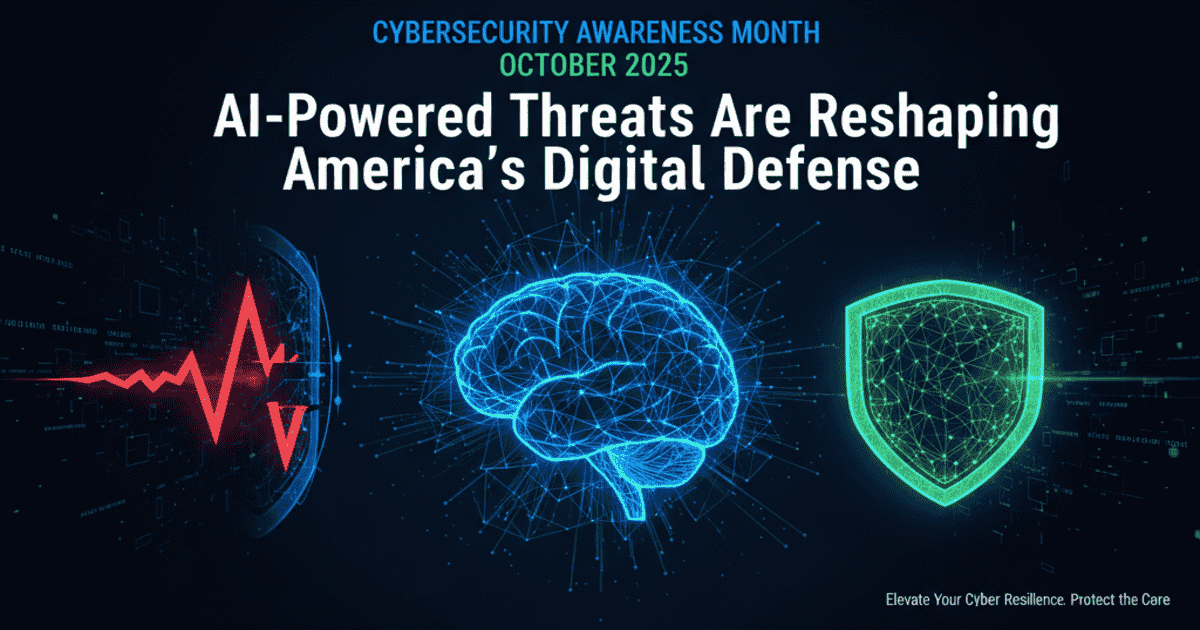
Cybersecurity Awareness Month 2025: How AI-Powered Threats Are Reshaping America’s Digital Defense

Uday Patil Oct 2, 2025 12 min read 79 views
Cybersecurity Awareness Month 2025: How AI-Powered Threats Are Reshaping America’s Digital Defense

Special Report – As October 2025 kicks off with Cybersecurity Awareness Month, the United States faces an unprecedented transformation in the cyber threat landscape. Artificial Intelligence has become a double-edged sword, simultaneously empowering defenders and supercharging attackers with capabilities that seemed like science fiction just years ago. The Department of Homeland Security (DHS) and Cybersecurity and Infrastructure Security Agency (CISA) have made this year’s campaign more critical than ever.

The New Frontier: AI-Powered Cyber Threats

The cybersecurity battleground has fundamentally changed. Traditional threat models focused on human hackers manually exploiting vulnerabilities. Today, we face adversaries enhanced by artificial intelligence that can automate vulnerability discovery by scanning billions of code lines in hours, identifying exploitable weaknesses faster than human security teams can patch them. These AI systems generate sophisticated phishing campaigns with hyper-personalized social engineering attacks that bypass traditional detection. Modern malware adapts in real-time, learning and evolving during attacks while adjusting tactics based on defensive responses. Perhaps most concerning, these threats scale attacks exponentially, as what once required hundreds of hackers can now be accomplished by small teams with AI tools.

This is not theoretical. These attacks are happening now across American infrastructure.

Inside Cybersecurity Awareness Month 2025

The official DHS and CISA campaign for this October focuses on four critical themes designed to help Americans navigate this AI-enhanced threat environment.

Week 1: Secure Our World (October 1-7) focuses on fundamental security practices that remain essential even as threats evolve, including multi-factor authentication (MFA) adoption, strong and unique password management, regular software updates and patching, and security awareness for remote work environments.

Week 2: AI and Emerging Technology Security (October 8-14) addresses the newest challenges, including understanding AI-powered attack vectors, securing AI and machine learning systems in business operations, protecting against deepfakes and synthetic media threats, and understanding quantum computing implications for encryption.

Week 3: Critical Infrastructure Protection (October 15-21) places special emphasis on sectors vital to national security, including energy grid cybersecurity, healthcare system resilience, financial sector protection, and transportation and logistics security.

Week 4: Building Cyber Resilience (October 22-31) focuses on creating sustainable security cultures through incident response planning and testing, business continuity in cyber crisis scenarios, cyber insurance and risk management, and workforce development in cybersecurity fields.

The AI Threat Matrix: What You’re Up Against

Understanding modern cyber threats requires recognizing how AI amplifies traditional attack methods.

AI-Enhanced Phishing Attacks

Gone are the days of obvious phishing emails with broken English and suspicious links. Today’s AI-generated phishing campaigns are virtually indistinguishable from legitimate communications.

The technology works through multiple mechanisms. Large language models create content with perfect grammar and tone-matched messages that appear authentic. AI analyzes social media and public data to craft targeted messages for thousands of individuals simultaneously, achieving personalization at scale. Machine learning identifies optimal timing when targets are most likely to click. Advanced evasion techniques involve AI testing multiple variations to bypass spam filters and security tools.

Security researchers report a 135% increase in successful phishing attacks using AI-generated content compared to traditional methods. This represents a fundamental shift in the threat landscape that organizations must address.

Deepfake Technology in Cybercrime

Synthetic media has evolved from novelty to serious security threat. Attack scenarios include CEO Fraud 2.0, where deepfake audio and video of executives authorize fraudulent transactions. Identity verification bypass uses fake biometric data to defeat authentication systems. Misinformation campaigns deploy synthetic videos to spread panic or manipulate markets. Blackmail and extortion schemes create compromising fake footage for ransom demands.

Financial losses from deepfake-enabled fraud exceeded $12.3 billion globally in 2024, with US businesses bearing the largest share of these costs.

Autonomous Malware and Smart Ransomware

The next generation of malicious software thinks for itself. Modern malware demonstrates environment awareness, recognizing when it operates in a sandbox and altering behavior accordingly. Lateral movement intelligence uses AI-driven reconnaissance to identify valuable targets within networks. Adaptive encryption in ransomware adjusts tactics based on victim response and payment likelihood. Self-propagation capabilities enable worms to optimize spread patterns using network analysis.

Recent ransomware campaigns tracked by CISA demonstrate increasingly sophisticated AI-assisted techniques that traditional defenses struggle to counter.

AI-Powered Social Engineering

Beyond phishing, AI enables comprehensive social engineering operations. Advanced tactics include voice cloning for real-time impersonation of trusted individuals during phone calls, behavioral analysis for predicting security questions and authentication responses, chatbots maintaining long-term relationships to gather intelligence, and psychological profiling to identify emotional vulnerabilities for exploitation.

Defending with AI: Fighting Fire with Fire

The same technology empowering attackers also enables revolutionary defense capabilities.

AI-Powered Security Operations Centers

Modern Security Operations Centers leverage AI to overcome human limitations. Automated threat detection analyzes millions of security events per second, identifying anomalous behavior patterns invisible to human analysts, correlating disparate signals across vast networks, and reducing false positives by 70-90%.

Predictive security forecasts attack vectors based on threat intelligence, identifies vulnerabilities before exploitation, recommends preemptive security measures, and optimizes security resource allocation across the organization.

Machine Learning for Endpoint Protection

Next-generation antivirus goes beyond signature-based detection. Behavioral analysis monitors process behavior for malicious patterns, detects zero-day exploits without prior knowledge, stops ransomware before encryption begins, and quarantines threats in milliseconds.

Continuous learning updates threat models in real-time, adapts to new attack techniques automatically, shares intelligence across security ecosystems, and reduces time-to-detection dramatically.

AI-Assisted Incident Response

When breaches occur, AI accelerates containment. Rapid response includes automated forensic analysis of compromised systems, intelligent containment strategy recommendations, root cause identification in minutes versus days, and orchestrated remediation across complex environments.

The Human Element: Why People Remain Critical

Despite AI’s power, cybersecurity ultimately depends on human judgment and decision-making.

Security Awareness Training Evolution

Traditional annual training modules no longer suffice. Modern programs incorporate continuous education through microlearning modules delivered weekly, simulated phishing tests with immediate feedback, gamification to increase engagement, and real-world threat scenario practice.

Behavioral science applications focus on understanding cognitive biases in security decisions, building security-conscious organizational culture, rewarding proactive security behaviors, and creating accountability without blame.

The Cybersecurity Skills Gap

America faces a critical shortage of cyber professionals. The current state reveals 700,000+ unfilled cybersecurity positions nationwide, with demand growing 35% faster than supply. Critical infrastructure sectors are most affected, and small businesses struggle to afford security expertise.

Government and industry initiatives provide solutions through expanded university cybersecurity programs, vocational training and certification programs, career transition support for veterans and career changers, and apprenticeship models for hands-on learning.

Critical Infrastructure: America’s Vulnerable Foundation

The National Terrorism Advisory System now explicitly addresses cyber threats to critical infrastructure, recognizing digital attacks pose existential risks.

Energy Sector Under Siege

The power grid represents an attractive target due to several vulnerabilities. Legacy SCADA systems operate with minimal security. Interconnected networks increase attack surface exposure. Supply chain risks exist in smart grid components. Limited cybersecurity budgets constrain utilities’ defensive capabilities.

Successful grid compromise could cause widespread blackouts affecting millions of Americans, economic damage in billions of dollars per day, loss of life due to disrupted emergency services, and cascading failures across dependent sectors.

Protection measures recommended by CISA guidelines include network segmentation isolating critical systems, continuous monitoring and anomaly detection, incident response exercises and planning, and information sharing with government agencies.

Healthcare: Lives in the Balance

Medical facilities face unique cybersecurity challenges. Healthcare is targeted because of valuable patient data for identity theft, urgent need for system availability during patient care, high willingness to pay ransoms to restore operations, and often outdated security infrastructure.

The real costs are substantial. The average healthcare breach costs $10.93 million. Patient care suffers delays during cyber incidents. Compromised medical devices pose direct safety risks. Regulatory penalties for data breaches add financial burden.

Building resilience requires healthcare organizations to implement zero-trust architecture, secure medical devices and IoT equipment, establish offline backup systems, and train staff on security protocols.

Financial Services: Following the Money

Banks and financial institutions remain prime targets. The threat landscape includes business email compromise (BEC) attacks, ATM and point-of-sale malware, cryptocurrency theft and fraud, and insider threats with data exfiltration.

Financial institutions face strict compliance requirements including Bank Secrecy Act (BSA) cybersecurity provisions, Gramm-Leach-Bliley Act (GLBA) safeguards, state-level data breach notification laws, and Federal Financial Institutions Examination Council (FFIEC) standards.

Building Your Cybersecurity Action Plan

Whether you are an individual, small business, or enterprise, these steps create meaningful security improvement.

For Individuals and Families

Immediate Actions to Take This Week: Enable multi-factor authentication on all accounts. Update passwords to unique, strong credentials using a password manager. Install security updates on all devices. Review privacy settings on social media platforms. Enable automatic updates wherever available.

Medium-Term Actions for This Month: Set up encrypted backups of important data. Review and freeze credit reports with major bureaus. Implement family cybersecurity rules and policies. Install reputable antivirus and anti-malware software. Create an emergency contact plan for cyber incidents.

Ongoing Habits to Develop: Question unexpected emails and messages before responding. Verify requests for money or sensitive information through alternative channels. Monitor financial accounts regularly for unauthorized activity. Stay informed about current threats. Teach children about online safety principles.

For Small and Medium Businesses

Foundation – Start Here: Conduct comprehensive cybersecurity risk assessment. Implement employee security awareness training programs. Deploy endpoint protection on all devices. Establish data backup and recovery procedures. Create incident response plan documentation.

Enhancement – Next Steps: Deploy email security gateway solutions. Implement network segmentation strategies. Enable security information and event management (SIEM) systems. Conduct regular security audits. Evaluate cyber insurance options and coverage.

Advanced – Mature Security: Establish security operations center (SOC) or managed security service. Implement zero-trust architecture principles. Deploy AI-powered threat detection systems. Participate in threat intelligence sharing communities. Conduct regular penetration testing exercises.

For Enterprise Organizations

Strategic Imperatives: Establish board-level cybersecurity governance. Make risk-based security investment decisions. Develop comprehensive supply chain security program. Conduct regular tabletop exercises and simulations. Integrate security into DevOps processes (DevSecOps).

Technical Excellence: Deploy next-generation firewall solutions. Implement extended detection and response (XDR) platforms. Establish cloud security posture management. Achieve identity and access management (IAM) maturity. Deploy automated security orchestration and response (SOAR) systems.

The Cost of Inaction

Cybersecurity is not optional; it is existential for modern organizations.

The financial impact is severe. The average data breach costs $4.45 million. Ransomware payment plus recovery averages $1.85 million. Business interruption losses often exceed direct costs. Regulatory fines can reach hundreds of millions of dollars.

Reputation damage includes customer trust erosion following breaches, competitive disadvantage in security-conscious markets, difficulty recruiting talent after public incidents, and long-term brand value destruction.

Operational consequences include extended downtime disrupting business operations, loss of intellectual property and competitive advantage, legal liabilities and class-action lawsuits, and potential business closure for severe breaches.

Government Resources and Support

The federal government provides extensive free resources to help organizations improve their security posture.

CISA offers services at no cost including cyber hygiene scanning that identifies vulnerabilities in public-facing systems, phishing campaign assessment that tests employee susceptibility, incident response assistance providing expert support during breaches, and threat briefings offering classified and unclassified threat intelligence.

Access these services at CISA.gov.

Small business resources are available from the Small Business Administration (SBA) offering cybersecurity guides and training, Federal Trade Commission (FTC) providing compliance guidance and best practices, Department of Commerce supplying supply chain security resources, and FBI InfraGard facilitating public-private partnerships for threat information.

Industry-specific support comes from Information Sharing and Analysis Centers (ISACs) serving each critical infrastructure sector with tailored threat intelligence and best practices.

Looking Ahead: The Future of Cybersecurity

Emerging technologies will continue reshaping the threat landscape.

The quantum computing threat looms large. Current encryption methods are vulnerable to quantum attacks. Adversaries employ “harvest now, decrypt later” strategies. Post-quantum cryptography transition is urgently needed. The timeline projects 5-10 years for practical quantum computers.

5G and IoT expansion brings billions of new connected devices creating expanded attack surface. Enhanced bandwidth enables new attack types. Edge computing presents security challenges. Security-by-design in IoT manufacturing becomes essential.

Artificial General Intelligence (AGI) development raises concerns about AI systems discovering novel exploits autonomously. An arms race in AI-powered security tools accelerates. Ethical considerations in automated cyber warfare emerge. Regulatory frameworks for AI in security become necessary.

Conclusion: Your Role in America’s Cyber Defense

Cybersecurity Awareness Month 2025 is not just about acknowledging threats; it is about taking action. Every American, every business, every organization has a responsibility to strengthen our collective digital resilience.

The AI revolution in cybersecurity presents both unprecedented challenges and powerful solutions. Success depends on staying informed by following CISA advisories and threat intelligence. Take action by implementing security best practices immediately. Embrace continuous improvement, recognizing that security is a journey, not a destination. Foster collaboration by sharing information and learning from others. Make adequate investment by allocating resources to cybersecurity programs.

The threats are real, sophisticated, and growing. But with knowledge, tools, and commitment, we can build a more secure digital future for America.


Essential Resources

Government Agencies:

Expert Analysis from CyberUpdates365: Visit CyberUpdates365 for real-time threat intelligence and analysis, security best practices and implementation guides, expert commentary on emerging threats, and practical security solutions for all organization sizes.

Related Articles:

Chinese Hackers Breach Multiple US Government Agencies: CISA Issues Emergency Directive for Cisco Zero-Day Vulnerabilities

2025 Cybersecurity Threats: AI-Powered Attacks, Major Data Breaches & Protection Strategies

The Complete Guide to Cybersecurity Threats in Massachusetts: 2025 Protection Strategies

BREAKING: Cisco ASA Zero-Day RCE Vulnerability Actively Exploited – Critical Security Alert

Make cybersecurity awareness a daily practice, not just an October focus.


About CyberUpdates365: We provide trusted cybersecurity intelligence, helping Americans stay protected against evolving digital threats. Our expert team monitors the threat landscape continuously to deliver actionable insights when you need them most.

Author

  • Uday Patil

    Uday Patil is a Cybersecurity Researcher, DevSecOps Engineer, and the Founder of CyberUpdates365. Specializing in Threat Intelligence and Zero-Day vulnerability analysis, Uday is dedicated to breaking down complex cyber threats into actionable insights. His mission is to empower developers and security teams worldwide with rapid alerts, remediation scripts, and practical guidance to stay ahead of the evolving threat landscape.