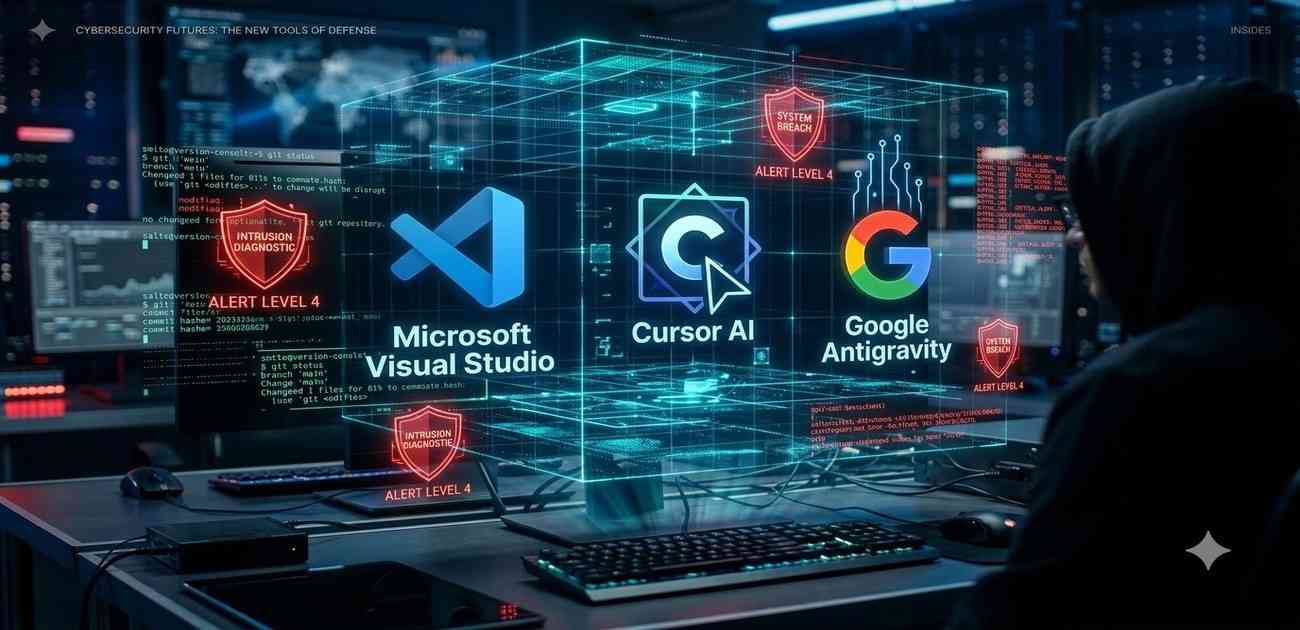
A Critical 1-Click RCE Vulnerability has been disclosed across three of the world’s most widely used software development environments: Microsoft Visual Studio Code, Cursor, and Google Antigravity. Discovered during automated security auditing by vulnerability researchers at AISLE, this security flaw exposed an estimated 50 million software developers worldwide to covert, arbitrary terminal code execution triggered solely by clicking a malicious link inside a Git commit message.
Enterprise DevSecOps teams confirm this Critical 1-Click RCE Vulnerability directly threatens developer endpoint sovereignty across multi-cloud environments. All three technology vendors have released official defensive remediation patches as of August 2026. Enterprise engineering leaders, security operations teams, and independent developers must update their integrated development environments immediately and audit recent development workflows for API key compromise.
How Critical 1-Click RCE Vulnerability Exploits Git Commits
The flaw exploited an architectural link parsing deficiency inside IDE version control rendering windows. When an attacker injected a malformed command URI into a standard Git commit message, clicking that link triggered silent, arbitrary code execution with full terminal administrative privileges without displaying confirmation dialogs or security warnings.
During standard collaborative development, engineering teams continuously review pull requests, commit histories, and branch tracking summaries directly within their terminal interfaces. This operational trust created the exact blind spot threat actors needed to deploy covert command payloads.
When a developer performed a single mouse click on an embedded link inside an altered Git commit history, the underlying application execution wrapper processed the syntax without engaging standard sanitization buffers. To the operating developer, the visual interface appeared normal, while hidden background terminal instructions executed immediately under full localized user permissions.
Targeted Corporate Assets and API Key Blast Radius
Once triggered, the exploitation payload gained complete localized filesystem authority. This permitted immediate automated extraction of unencrypted environmental storage variables containing high-privilege corporate secrets, specifically targeting OpenAI access tokens, Anthropic programmatic access keys, Stripe cryptographic billing tokens, and GitHub SSH repository credentials.
A software engineer’s primary workstation contains advanced networking permissions, active database strings, and cloud deployment secrets. When an unauthorized attacker attains equivalent read, write, and execute clearance, the blast radius threatens the entire enterprise infrastructure.
Because many modern AI-assisted engineering tools share upstream architecture, a single parsing bug can compromise millions of workstations simultaneously. We observed similar structural dependency risks during our technical deep dive into the Cursor AI Duneslide vulnerability discoveries. Stolen access tokens and cloud billing credentials can cost companies thousands of dollars in illicit compute usage within hours.
Why the Critical 1-Click RCE Vulnerability Hit Multiple IDEs
When evaluating how a Critical 1-Click RCE Vulnerability spreads, analysts discovered that shared upstream parsers leave downstream IDE forks equally exposed. Modern AI-native development platforms including Cursor and Google Antigravity are architecturally derived from Microsoft’s open-source Visual Studio Code foundation. Because core link rendering engines are shared across these environments, a structural parsing defect inside the parent codebase automatically cascaded into every downstream derivative tool.
The developer ecosystem is adopting AI-assisted coding studios rapidly due to predictive syntax generation and automated debugging efficiency. However, rather than building custom user interface rendering layers from scratch, vendors frequently build specialized extensions on top of the established VS Code architecture.
Security engineering leaders frequently assume that deploying varied developer software across different team divisions naturally reduces systemic vulnerability risk. When multiple tools rely on identical upstream parsing libraries, an exploitation bug in the foundational parent repository exposes every localized variation at once. You can review practical containment architectures within our comprehensive 2026 AI agentic security enforcement guide.
To monitor verified developer tool exploits and enterprise vulnerabilities, explore our 2026 Enterprise CVE & Vulnerabilities Security Hub.
Discovery Timeline Across Microsoft, Google, and Cursor
AISLE researchers first discovered the Critical 1-Click RCE Vulnerability inside VS Code and Cursor during automated audits during automated vulnerability evaluations in autumn 2025 and issued responsible disclosures. When Google Antigravity launched in early 2026 with the same underlying bug, AISLE dispatched immediate notifications, prompting rapid patch deployments across all three platforms.
- Automated Discovery: Advanced vulnerability scanning systems flagged abnormal protocol execution pathways within Microsoft VS Code and Cursor, leading to confidential disclosures sent directly to Microsoft Security Response Center (MSRC) and Cursor engineering leadership.
- Derivative Detection: Following the public launch of Google Antigravity, analysis confirmed an identical vulnerable Git commit interaction vector within its inherited rendering architecture. Researchers transmitted an urgent disclosure directly to Google software defense teams.
- Vendor Patch Verification: Google remediated the structural anomaly and deployed a global protective software patch within days of notification. Cursor rapidly released client patch distributions across its active installations, while Microsoft’s definitive architectural fix arrived subsequently.
All current production software releases across VS Code, Cursor, and Google Antigravity have successfully patched this execution pathway. Security professionals can evaluate the automated scanning methodologies employed during the forensic investigation directly inside the AISLE vulnerability research report on AI code editor RCE flaws.
Actionable Mitigation & Enterprise Remediation Checklist
To remediate this Critical 1-Click RCE Vulnerability, SecOps network defenders must enforce immediate IDE binary version updates, execute mandatory cryptographic secret rotations for exposed developer access tokens, and run automated script inspections across internal Git repository commit logs to identify historical compromise signs.
You must align internal endpoint security audits with institutional defensive standards such as those detailed in the NIST Special Publication 800-53 zero-trust controls and official emergency operational mandates from CISA vulnerability guidance.
- Phase 1: Binary Normalization (IDE Version Enforcement): Audit corporate endpoints via MDM controllers. Enforce mandatory updates for VS Code, Cursor, and Google Antigravity to the latest available patched release. Verify vendor changelogs to confirm fix inclusion. Priority level is Critical.
- Phase 2: Secret Rotation (API Key Reset): Initiate mandatory cryptographic rotation across credentials residing on endpoints that accessed unverified external repositories. Revoke and reissue OpenAI, Anthropic, Stripe, and SSH keys immediately. Priority level is Critical.
- Phase 3: Repository Audits (Git Commit Log Inspection): Deploy automated scripts across software repositories to inspect recent Git commit message bodies and branch notations for malformed URL schemes or obfuscated terminal command syntax. Priority level is High.
- Phase 4: Process Hunting (EDR Telemetry Review): Review EDR behavioral logs for anomalous subprocess execution descending from IDE parent processes, specifically identifying code.exe or cursor.exe directly invoking bash or external network sockets. Priority level is High.
- Phase 5: Sandbox Isolation (Containerized Coding): Mandate that external open-source evaluation occurs strictly within isolated cloud containers possessing read-only filesystem restrictions and complete network segregation from local credential stores. Priority level is Medium.
Frequently Asked Questions
What caused the Critical 1-Click RCE Vulnerability in modern code editors?
The vulnerability exploited an inadequate link sanitization architecture within IDE version control display interfaces. When an attacker embedded a malicious executable URL within a Git commit message, a developer clicking that link inside the editor executed arbitrary terminal commands in the background under full workstation privileges without triggering confirmation prompts.
Why did this vulnerability impact Cursor, VS Code, and Google Antigravity at the same time?
Because modern AI-native developer tools including Cursor and Google Antigravity are heavily derived from Microsoft’s open-source Visual Studio Code architecture, core rendering mechanics are shared across platforms. A parsing defect within the upstream parent codebase consequently cascaded down into downstream developer applications.
What sensitive data could attackers exfiltrate using this editor vulnerability?
Upon execution, the attack payload gained identical filesystem authority as the authenticated developer. This allowed instant automated extraction of localized environmental storage files and configuration manifests containing sensitive corporate assets, specifically targeting OpenAI API keys, Anthropic programmatic tokens, Stripe billing secrets, and SSH deploy credentials.
Could the malicious attack continue operating after the developer closed the editor?
Yes. Once arbitrary terminal code execution occurred, automated payloads routinely installed background daemon persistence routines, secondary shell profile scripts, and kernel-level keystroke telemetry collectors. These malicious operations remained functional across operating system restarts long after the host coding tool shut down.
What immediate remediation steps should engineering teams execute to protect systems?
Organizations must immediately update all installations of Visual Studio Code, Cursor, and Google Antigravity to their latest patched software releases. Due to the silent operational profile of this exploit, security leaders should audit recent Git commit interaction histories and enforce cryptographic rotation for any API keys or credentials stored on endpoints that accessed unverified repositories.
Reported by CyberUpdates365 Threat Intelligence Unit. Delivering verified technical forensics on active enterprise security breaches, zero-day CVE advisories, and the operational future of DevSecOps defense architectures.