The Coca-Cola Company has confirmed a ransomware attack on its dairy subsidiary Fairlife, forcing the company to suspend production operations across the United States. The disclosure came through an official Form 8-K filing with the U.S. Securities and Exchange Commission (SEC) on July 16, 2026, making this one of the highest-profile ransomware incidents to hit the food and beverage sector this year.
Fairlife, a Chicago-based dairy company known for its Ultra-Filtered Milk, Core Power Protein Shakes, and Nutrition Plan products, generated roughly $4 billion in sales in 2024, making it a significant business for Coca-Cola. The scale of the disruption underscores how vulnerable even well-resourced consumer brands remain to modern ransomware operations.
What Happened in the Fairlife Ransomware Attack?
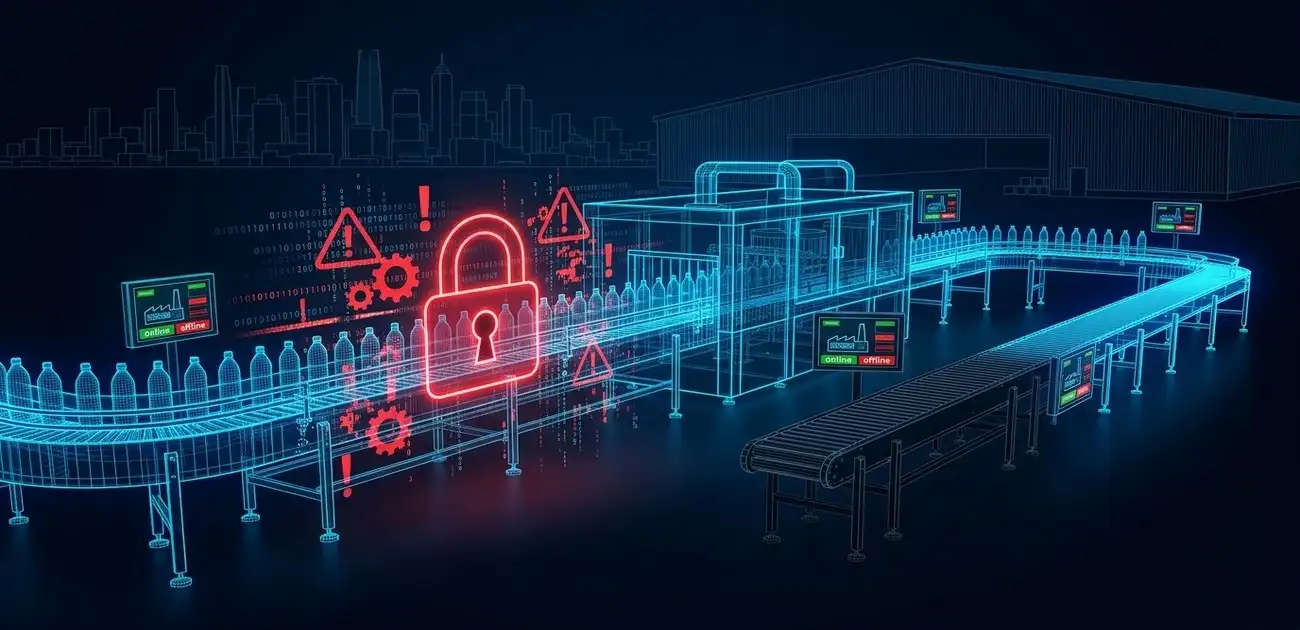
According to the SEC filing, Fairlife identified unauthorized access by a third party to a portion of its systems, including systems tied directly to production. Once the intrusion was detected, Coca-Cola activated its incident response and business continuity protocols and brought in outside cybersecurity advisors to investigate.
The company has also notified law enforcement. As a precaution, and likely to contain the spread of the ransomware, Fairlife’s U.S. production operations were taken offline entirely. Canadian production facilities were not affected, suggesting the two operations run on largely separate network infrastructure.
Coca-Cola has been clear that product quality and safety were not compromised by the incident. This is an important distinction: while the attack disrupted operational technology and manufacturing systems, there is no indication that the ransomware reached food safety or quality control systems.
Who Is Behind the Attack?
As of this writing, no ransomware group has publicly claimed responsibility for the Fairlife attack. Coca-Cola has also not disclosed whether any data was stolen during the intrusion, or whether the company has received an extortion demand.
This silence is notable. Most modern ransomware operations follow a “double-extortion” model — stealing sensitive data before encrypting systems, then threatening to leak that data publicly if a ransom isn’t paid. If Fairlife’s attackers did exfiltrate data, security researchers expect any extortion attempt or leak-site posting to surface in the coming weeks.
Why Food and Beverage Companies Are Becoming Prime Ransomware Targets
The Fairlife incident fits a broader, troubling pattern. Ransomware gangs have increasingly turned their attention to food and beverage manufacturers in recent years, with major names like JBS, Dole, and Campbell’s Soup all suffering disruptive attacks previously.
The appeal for attackers is straightforward: food production runs on tight, around-the-clock schedules with minimal tolerance for downtime, and manufacturing environments often blend older operational technology (OT) with modern IT networks. That combination creates both urgency, which pressures victims to pay quickly, and technical weak points that are harder to patch than a typical office network.
What Happens Next
Coca-Cola says it is working to restore affected systems and resume Fairlife’s U.S. production, though it has not provided a timeline. In its SEC filing, the company stated it has not yet determined whether the incident is reasonably likely to have a material impact on its finances — language that keeps the door open for a more significant disclosure if the investigation uncovers deeper damage, stolen data, or an extortion demand.
Why This Matters: Lessons for Manufacturing Security
The Fairlife attack is a reminder that manufacturing and operational technology environments need the same rigor as traditional IT security:
- Segment IT and OT networks: Production floor systems should never sit on the same flat network as corporate email and office systems, limiting how far an attacker can move after an initial breach.
- Maintain offline, immutable backups: Manufacturing systems and their configuration data need backups that ransomware cannot reach or encrypt, enabling faster recovery without paying a ransom.
- Plan for manual failover: Facilities that can temporarily run critical safety processes manually recover faster than those entirely dependent on digital systems.
- Treat vendors as part of the attack surface: Subsidiaries and third-party suppliers, like Fairlife within Coca-Cola’s broader business, need security standards consistent with the parent company’s.
Frequently Asked Questions
Is Fairlife milk safe to drink after the ransomware attack?
Yes. Coca-Cola has confirmed that product quality and safety were not affected by the ransomware attack. The incident impacted production and IT systems, not the products themselves.
Which ransomware group attacked Fairlife?
As of this report, no ransomware group has publicly claimed responsibility for the attack, and Coca-Cola has not identified the group behind the intrusion.
Was customer or company data stolen in the Fairlife attack?
Coca-Cola has not confirmed whether data was stolen. Many modern ransomware attacks involve data theft before encryption, so an extortion attempt could still surface as the investigation continues.
Will this affect Fairlife product availability in stores?
Because U.S. production was temporarily suspended, some supply disruptions and delays are possible depending on how long recovery takes. Canadian production was not affected.
Reported by CyberUpdates365 Desk
Delivering the latest insights on enterprise security, federal AI directives, and the future of IT infrastructure. Follow us for daily updates on how technology is reshaping the corporate landscape.