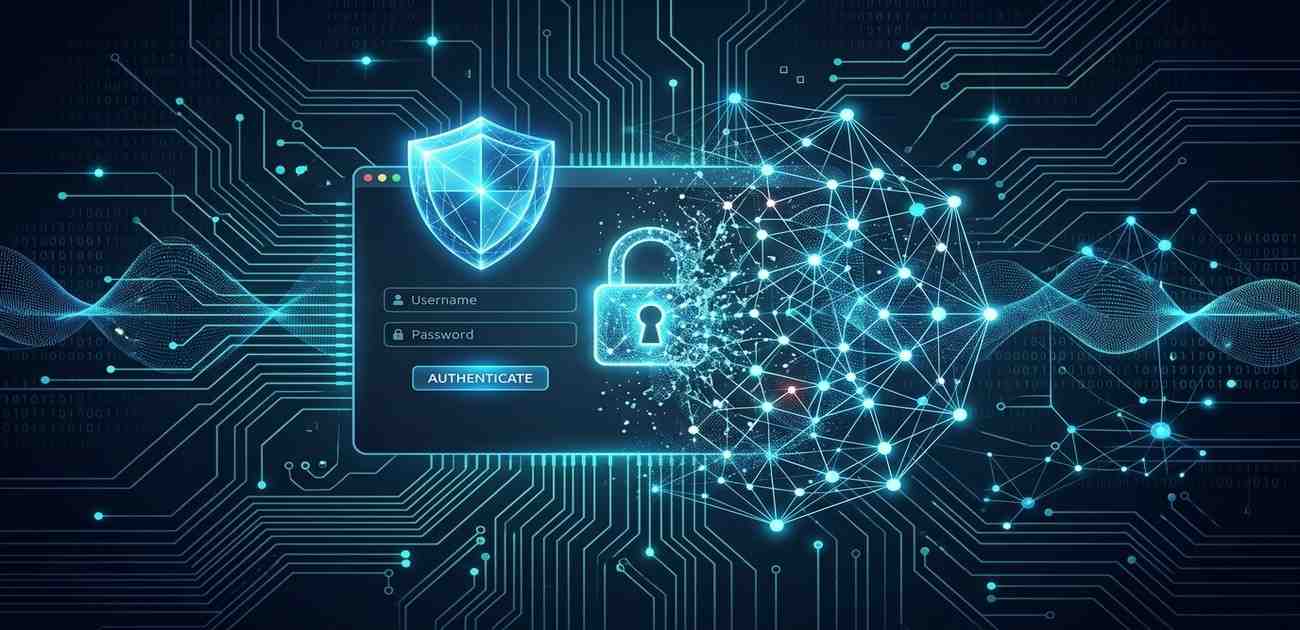
Enterprise identity architectures are entering a decisive transition as post-quantum authentication moves from theoretical laboratory research into frontline enterprise deployments. While popular discussions focus on the eventual day quantum computing breaks RSA public-key algorithms, modern IT teams recognize that implementing post-quantum cryptography PQC begins directly at the employee login screen.
According to cryptographic modernization standards established by the National Institute of Standards and Technology (NIST), securing digital identities against quantum interception requires adopting crypto-agile architectures. To understand how quantum-resistant credentials integrate into overall zero-trust ecosystems, explore our authoritative Zero Trust Architecture Definitive Guide 2026.
Why Post-Quantum Authentication Starts at the Enterprise Login Screen
Most organizations hesitate to begin quantum migration due to the daunting complexity of overhauling legacy databases and deep storage arrays. However, identity verification, single sign-on (SSO) gateways, and session token generation represent the most pragmatic starting points for quantum ready identity security.
Cybersecurity innovators like Quantum Secure Encryption Corp. (QSE) are deploying the QAuth quantum security platform across rapidly expanding international commercial hubs, including Indonesia and Malaysia. Rather than requiring enterprises to reconstruct internal networks, modern platforms inject quantum-resilient cryptographic tokens directly into existing identity workflows.
The Critical Threat: Harvest Now, Decrypt Later (HNDL)
The operational urgency surrounding post-quantum authentication is driven by the harvest now decrypt later defense doctrine. Sophisticated nation-state adversaries are currently intercepting and archiving encrypted enterprise network traffic, government telecommunications, and corporate authentication handshakes.
While adversaries cannot decrypt this harvested intelligence using classical binary supercomputers today, stored encrypted archives will become completely vulnerable the moment cryptographically relevant quantum computers (CRQCs) come online. If an attacker possesses archived authentication keys or SAML tokens, they will permanently compromise historical enterprise sessions unless protected by post-quantum algorithms.
Classical Cryptography vs. Post-Quantum Authentication Matrix
The comparative evaluation table below outlines the core differences between traditional cryptographic handshakes and quantum-resilient authentication protocols:
| Security Dimension | Classical Identity Systems (RSA/ECC) | Post-Quantum Authentication (PQC) | Quantum Resilience Impact |
|---|---|---|---|
| Key Exchange Algorithm | Diffie-Hellman / ECDHE | ML-KEM (NIST FIPS 203) | Resists Shor’s quantum factoring algorithm |
| Digital Signatures | RSA-2048 / ECDSA | ML-DSA (FIPS 204) / SLH-DSA (FIPS 205) | Guarantees non-repudiation against quantum spoofing |
| HNDL Vulnerability | High (Vulnerable to retro-active decryption) | Zero (Lattice-based cryptographic defense) | Safeguards archived session tokens indefinitely |
| Key Length & Overhead | Compact public keys (~256 to 2048 bits) | Larger public keys (~800 to 2500 bytes) | Requires crypto-agile software buffers |
Actionable Technical Checklist: Preparing Identity Systems for PQC
Enterprise engineering teams can begin future-proofing their identity infrastructure immediately by executing these foundational steps:
- Audit Identity Provider (IdP) Roadmaps: Evaluate corporate SSO providers (including Microsoft Entra ID and Okta) to ensure their development pipelines support finalized NIST FIPS standards for SAML and OIDC token issuance.
- Implement Software Crypto-Agility: Abstract cryptographic libraries within custom applications. Avoid hardcoding specific cipher suites so engineering teams can swap traditional algorithms for lattice-based PQC without refactoring application logic.
- Deploy Hybrid Key Encapsulation (ML-KEM): Configure internal TLS termination proxies to test hybrid key exchange mechanisms, combining ECDHE with ML-KEM to protect live communications against quantum decryption.
- Mandate Hardware FIDO2 Security Keys: Deploy phishing-resistant FIDO2 hardware tokens across privileged access roles to neutralize credential harvesting during identity modernization transitions.
Frequently Asked Questions About Post-Quantum Authentication
What is QAuth and how does it secure enterprise authentication?
QAuth is a quantum-resilient identity platform engineered to protect enterprise logins using quantum-delivered entropy and zero-knowledge architectures. It strengthens access control without forcing organizations to replace their existing infrastructure.
Which NIST standards govern post-quantum cryptography?
NIST has standardized three primary Federal Information Processing Standards: FIPS 203 (ML-KEM) for key encapsulation, FIPS 204 (ML-DSA) for lattice-based digital signatures, and FIPS 205 (SLH-DSA) for stateless hash-based signatures.
Why is upgrading authentication more urgent than encrypting stored databases?
Migrating multi-terabyte enterprise databases is a multi-year, complex project. In contrast, authentication tokens and session keys are exchanged across public internet channels continuously, making the login screen the most immediate target for harvest-now-decrypt-later espionage.
Strategic Conclusion: Future-Proofing Identity Against Quantum Threats
The dawn of quantum computing demands a proactive reassessment of enterprise data protection. Waiting for commercial quantum machines to demonstrate cryptanalytic breakthroughs leaves sensitive corporate intelligence exposed to present-day harvesting operations.
By implementing post-quantum authentication at the login perimeter, adopting crypto-agile system frameworks, and enforcing zero-trust identity policies, enterprise leaders can ensure enduring defense across the post-quantum computing era.