

A sophisticated threat campaign has surfaced as the Herodotus Android malware demonstrates advanced evasion capabilities designed to defeat modern mobile banking protections. Emerging as a next-generation Android banking trojan Herodotus specifically targets financial applications across international markets, utilizing innovative behavioral mimicry to bypass defensive fraud engines.
According to technical threat research published by ThreatFabric intelligence teams, this mobile malware represents a fundamental evolution in unauthorized device takeover (DTO). To explore how hardware exploits compromise mobile operating systems, inspect our comprehensive Zero-Click Device Exploit and Firmware Security Guide.
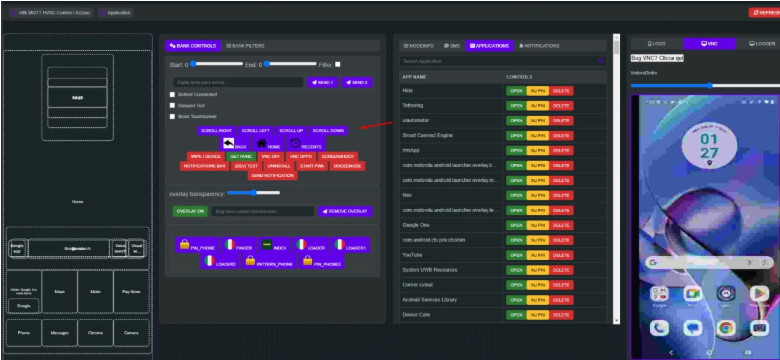
Understanding Herodotus Android Malware and Human Behavior Mimicry
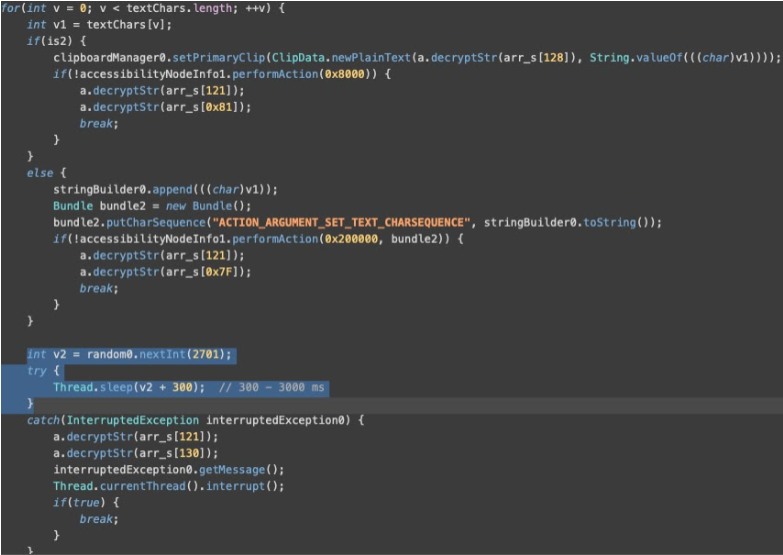
What distinguishes the Herodotus Android malware from conventional banking trojans is its strategic focus on evading behavioral biometrics. Modern financial applications monitor typing velocity, touch pressure, and gesture trajectories to confirm legitimate human interaction. When automated malware executes rapid string injections, automated anti-fraud engines flag and terminate the transaction.
Herodotus defeats this protection through randomized input pacing. Rather than injecting complete credential strings simultaneously via standard Android API commands, the trojan fragments text into individual keystrokes. By inserting randomized intervals between 300 and 3,000 milliseconds, the malware successfully replicates natural human typing cadence, executing an effective bypass biometric detection Android banking strategy.
Key Infection Vectors and Accessibility Service Abuse
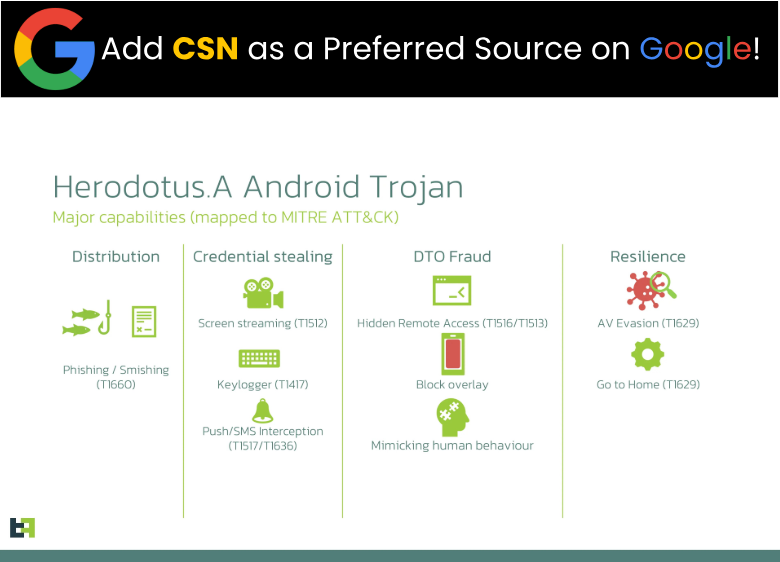
The distribution methodology behind Herodotus relies upon targeted SMS phishing (SMiShing) campaigns that direct mobile users to third-party web portals hosting malicious APK packages. The deployment architecture follows a structured multi-stage execution model:
- Custom Dropper Evasion: The initial installer deploys a tailored dropper routine engineered to circumvent security restrictions introduced in Android 13 and Android 14 regarding restricted settings.
- Accessibility Service Hijacking: Upon installation, the malware displays a deceptive loading screen while simultaneously prompting victims to enable Android Accessibility Services in system settings.
- Automated Permission Harvesting: Once accessibility permissions are granted, Herodotus silently assigns itself device administrator privileges, prevents manual uninstallation, and intercepts SMS verification codes.
- Dynamic Overlay Delivery: The trojan queries its command-and-control (C2) server with the list of installed banking applications, downloading tailored phishing overlays that render seamlessly over legitimate mobile banking windows.
Mobile Banking Trojan Comparison Matrix
The comparative analysis below illustrates how Herodotus compares against other prominent Android banking trojans operating across global mobile networks:
| Malware Family | Input Automation Method | Biometric Evasion Status | Primary Infection Vector |
|---|---|---|---|
| Herodotus Trojan | Randomized character delays (300-3000ms) | Advanced Behavioral Mimicry | SMiShing and malicious side-loaded APK droppers |
| Brokewell Malware | Accessibility ACTION_SET_TEXT API | None (Standard automated input) | Fake browser update landing pages |
| Octo / Exobot | Remote VNC screen streaming and click injection | Partial (Manual operator control) | Malicious utilities on third-party app repositories |
| Hook Trojan | WebSocket remote command tunneling | Moderate (Device takeover commands) | Social engineering lures disguised as security updates |
Evasion Mechanics: The Shift Toward Human Behavior Mimicry Malware
The emergence of human behavior mimicry malware signals an industry-wide escalation between financial institutions and cybercrime syndicates. In underground cybercrime forums, threat actors operating under the moniker K1R0 distribute Herodotus under a Malware-as-a-Service (MaaS) model, broadening access for low-tier extortion operators.
Because the trojan operates directly on the victim’s authenticated device (on-device fraud), traditional security safeguards such as device fingerprinting and IP geolocation tracking fail to flag unauthorized sessions. Defenders must deploy continuous behavioral analysis that models comprehensive user interaction habits rather than relying solely on timing thresholds.
Mobile Banking Trojan Defense: Critical Hardening Guidelines
Safeguarding smartphones and organizational mobile fleets against sophisticated banking trojans requires executing disciplined operational practices on mobile banking trojan defense:
- Prohibit Third-Party Side-Loading: Restrict application installations strictly to the official Google Play Store. Enterprise administrators should enforce mobile device management (MDM) profiles blocking unverified package installations.
- Audit Accessibility Permissions: Review Android system settings regularly. No utility, messaging, or financial application legitimately requires full Accessibility Service control unless delivering assistive physical accessibility features.
- Enforce Google Play Protect: Verify that Google Play Protect remains permanently enabled with real-time application scanning and behavioral threat detection activated.
- Transition Away from SMS Two-Factor Authentication: Replace vulnerable SMS OTP delivery with hardware security keys (FIDO2) or dedicated authenticator applications that resist mobile accessibility scraping.
Related guide: For broader context and related coverage, see our device security audit guide.
Frequently Asked Questions Regarding Herodotus Android Malware
How does the Herodotus Android malware bypass behavioral biometrics?
Herodotus splits targeted text strings into individual characters and introduces randomized delays ranging from 300 to 3,000 milliseconds between keystrokes. This replicates human typing variability, preventing automated fraud engines from detecting robotic input execution.
Can Google Play Protect detect and block Herodotus?
Yes. Google Play Protect continuously updates threat definitions to identify Herodotus dropper packages and block accessibility service abuse. Keeping device definitions updated provides effective automated defense.
What should a user do if they suspect their Android phone is infected?
Immediately disconnect the device from Wi-Fi and mobile data networks. Boot into Android Safe Mode to prevent the malware from launching, revoke Accessibility permissions in system settings, uninstall unfamiliar recently added applications, and contact your financial institutions to place immediate monitoring holds on active accounts.
Strategic Conclusion: Defending Mobile Ecosystems Against Behavioral Exploitation
The emergence of the Herodotus Android malware marks a transformative milestone in mobile cyber threats. By shifting focus from simple credential theft to sophisticated human behavior mimicry, threat actors continue to challenge traditional fraud prevention frameworks.
Mitigating this threat requires proactive consumer vigilance, restriction of unverified application downloads, and enterprise investment in advanced machine learning telemetry capable of identifying nuanced behavioral anomalies.