
Operation Economic Outcast: U.S. Sanctions Iran Linked Hackers Targeting Infrastructure
CyberUpdates365 Threat Intelligence Desk: Breaking analysis of “Operation Economic Outcast” (August 2026)—the sweeping U.S. Treasury sanctions targeting Iranian state-sponsored cyber actors and the Mabna Institute for exploiting American critical infrastructure.
By Uday Patil, Cybersecurity Analyst
The U.S. Department of the Treasury has officially declared financial war on Iranian cyber operations. In a massive regulatory sweep codenamed Operation Economic Outcast, the U.S. government has sanctioned nearly 60 Iran-linked entities, effectively attempting to sever the financial lifelines of the Islamic Revolutionary Guard Corps (IRGC) and the Ministry of Intelligence and Security (MOIS).
According to Treasury Secretary Scott Bessent, this “economic onslaught” specifically targets the digital assets sector, marking a historic escalation in how the U.S. responds to nation-state cyber warfare.
The Target: Mabna Institute and MOIS Cyber Networks
At the center of these sanctions are high-profile Iranian nationals affiliated with the Tehran-based Mabna Institute. There are a total of six unique individuals targeted across two separate U.S. government actions: the Treasury Sanctions and the State Department’s bounty program.
The Network Compromise Trio (Treasury Sanctions)
According to the Treasury’s intelligence, the bulk of the actual network compromise activity against U.S. critical infrastructure (including energy, healthcare, and defense contractors) since late 2023 was executed by three primary mabna institute hackers:
- Keyvan Fayyaz Ghareh Blagh
- Saber Shahbazi Balujeh
- Mohammad Reza Kadkhoda’i
The $10 Million Bounty (U.S. State Department)
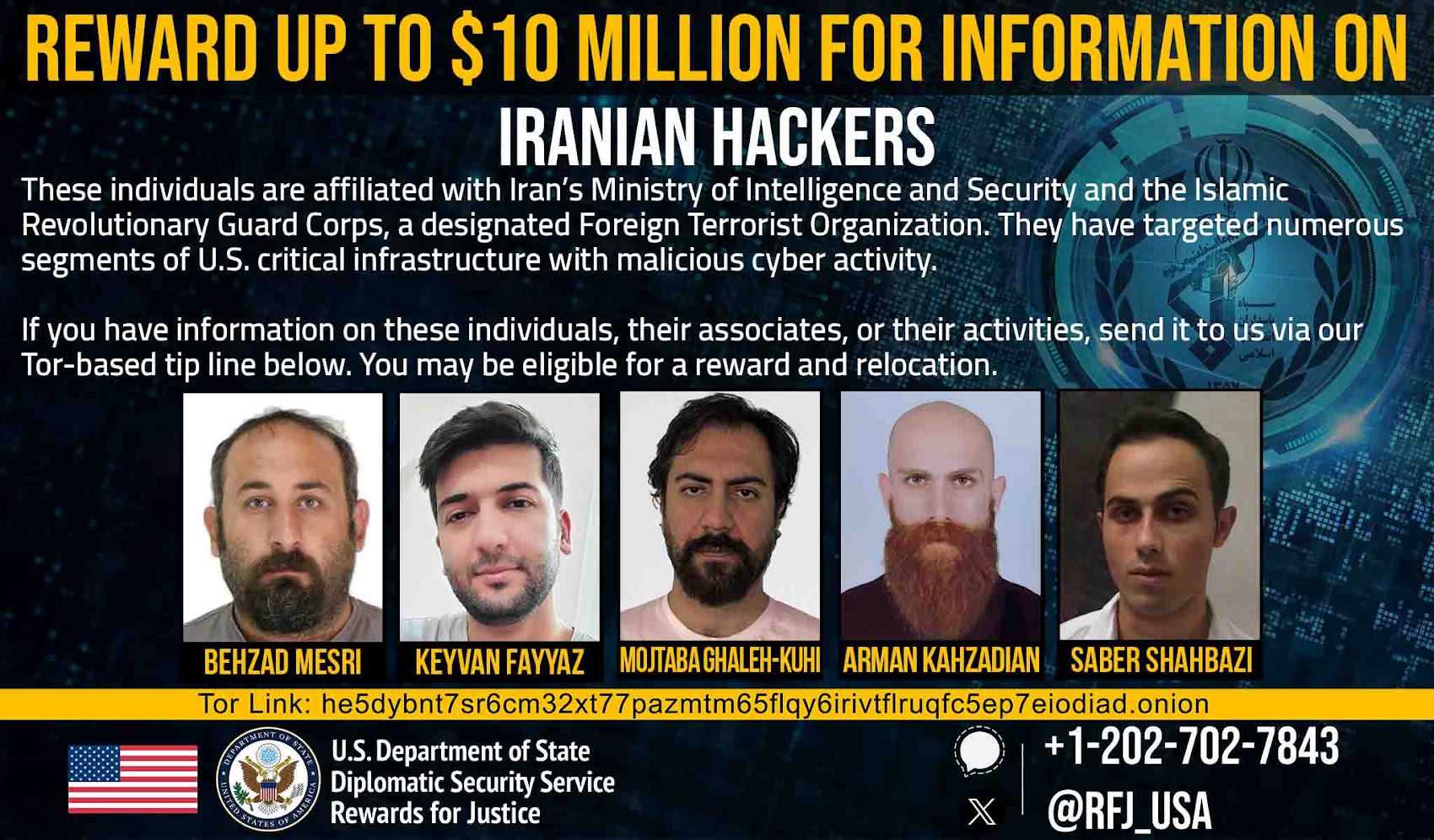
In tandem with the Treasury’s financial sanctions, the U.S. State Department’s Rewards for Justice program released an official wanted poster, offering up to $10 Million for information on five specific individuals. This list includes historical threat actors like Behzad Mesri (indicted in 2017 for the HBO hack), as well as Arman Kahzadian, who focused almost exclusively on cryptocurrency heists rather than infrastructure.
Clarification Note: Four of these actors (Blagh, Balujeh, Ghal’eh-Kuhi, and Mesri) appear in both the Treasury sanctions and the Rewards for Justice bounty list. Only Kadkhoda’i (Treasury-only) and Kahzadian (Bounty-only) differ between the two enforcement actions, bringing the total number of unique targets to six.
The Crypto Trail: $16.8 Million in Stolen Digital Assets
Interestingly, the Treasury noted that these iran linked hackers are heavily motivated by personal greed. While they operate under the MOIS umbrella, some members prioritize personal crypto-enrichment over state-directed espionage.
A deep-dive blockchain analysis by TRM Labs revealed the massive financial scale of this operation. Investigators tracked 30 cryptocurrency wallets linked to Mabna Institute members, uncovering approximately $16.8 million in total received funds.
Keyvan Fayyaz Ghareh Blagh alone controlled 10 addresses that processed 92% of the network’s on-chain volume (over $15.5 million) between 2018 and August 2026. This data underscores why operation economic outcast treasury sanctions have explicitly named the digital assets space as a critical battlefield.
A Warning for Critical Infrastructure
The urgency of these sanctions follows a drastic spike in kinetic and cyber warfare. Over the past year, Iranian-affiliated actors have escalated attacks against Western infrastructure.
To track ongoing state-sponsored espionage campaigns and advanced persistent threat groups, inspect our comprehensive Cyber Security Threat Monitoring and APT Vault.
As we previously covered in our analysis of the 2023 Florida water district incidents, Iran-linked groups like CyberAv3ngers have aggressively targeted vulnerable Operational Technology (OT). Recent reports confirm the sheer scale of these intrusions: attacks have impacted more than 30 utilities in Minnesota alone, with similar intrusions reported across at least 11 other states.
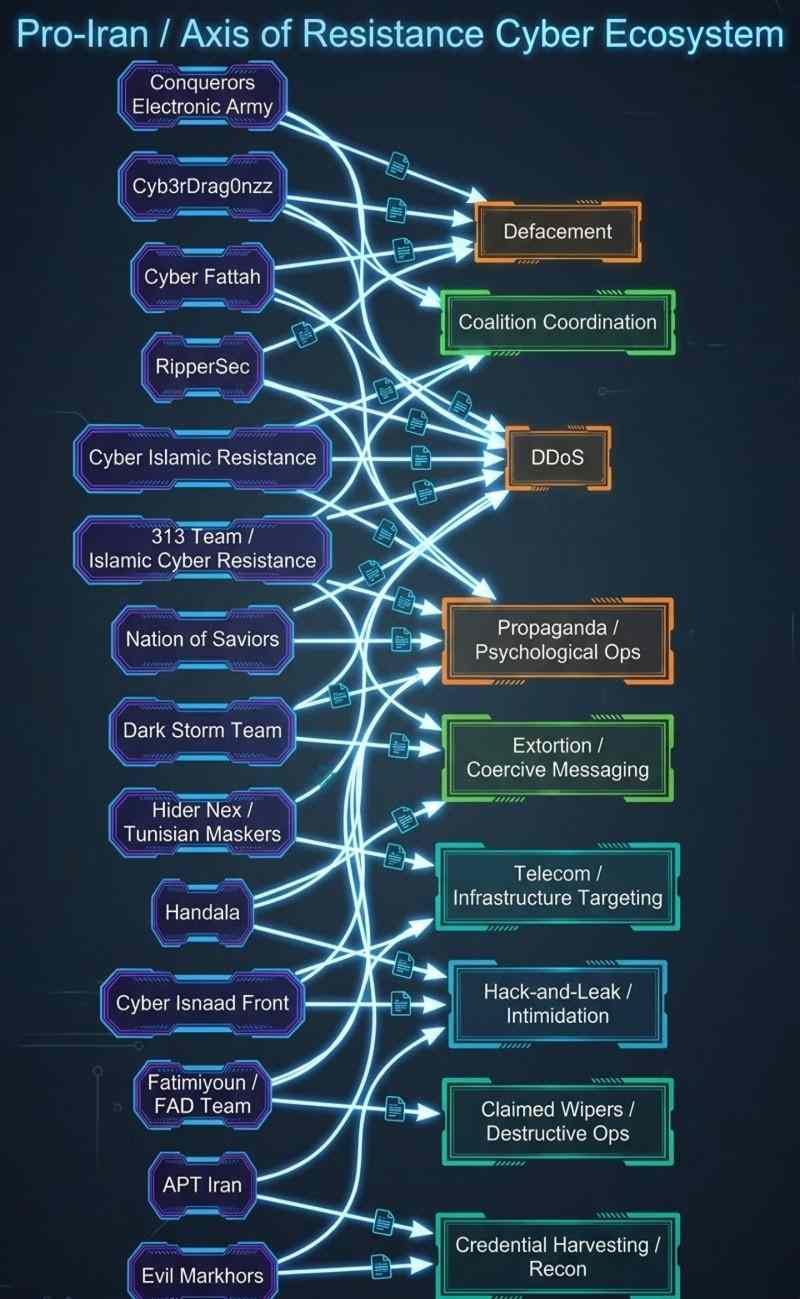
The threat is global. Last month, suspected Iranian hackers successfully shut down a small U.K. power plant for four days. While the wider energy grid remained safe, it proved that these actors have the capability to cause physical disruption.
Actionable Guide: Defending Against Nation-State Actors
State-sponsored groups do not rely on “magic” zero-days; they exploit systemic weaknesses. To defend your organization against MOIS-directed threats, we strongly recommend following the official CISA StopRansomware guidelines and implementing these protocols immediately:
- Isolate OT from IT Networks: Never allow your Operational Technology (like water pumps or power grid controls) to connect directly to the public internet. As advised by federal agencies, implement strict network segmentation.
- Audit Cryptocurrency Vendors: Ensure any blockchain or financial vendors your enterprise uses comply strictly with OFAC regulations, as secondary sanctions will now penalize platforms doing business with Iran.
- Implement FIDO2 Authentication: Nation-state actors frequently bypass SMS-based 2FA. Move your critical infrastructure access to hardware-backed security keys. (See our complete MFA and SIM-Swapping Defense Guide for step-by-step setup).
- Incident Response Planning: Assume breach. Maintain offline, encrypted backups and regularly test your disaster recovery plan. For historical context on how long recovery can take, review our 2026 Data Breach Timeline.
Related guide: For broader context and related coverage, see our nation-state and APT threat guide.
Frequently Asked Questions (FAQ)
What is Operation Economic Outcast?
Operation Economic Outcast is an August 2026 U.S. Treasury initiative that placed sweeping sanctions on nearly 60 Iranian individuals, vessels, and entities. It aims to cut off financial lifelines, particularly in the digital assets and cyber sectors, to the IRGC and MOIS.
Who are the Mabna Institute hackers?
The Mabna Institute is a Tehran-based cyber threat group linked to Iran’s Ministry of Intelligence and Security (MOIS). They are notorious for conducting cyber espionage, ransomware attacks, and intellectual property theft against U.S. defense contractors and critical infrastructure.
How do Iranian hackers fund their operations?
Blockchain analysis reveals that these threat actors heavily rely on cryptocurrency to launder extorted funds and finance operational infrastructure, utilizing front companies to bypass traditional banking sanctions.
Verdict & Security Summary
The sheer scale of Operation Economic Outcast demonstrates that the U.S. government recognizes cyber-espionage and cryptocurrency as the primary arteries of modern warfare. As us critical infrastructure cyber attacks become more frequent and physically disruptive, organizations can no longer rely on perimeter defense alone. Hardening OT networks, monitoring digital asset flows, and enforcing strict access controls are the only ways to survive the escalating digital crossfire.